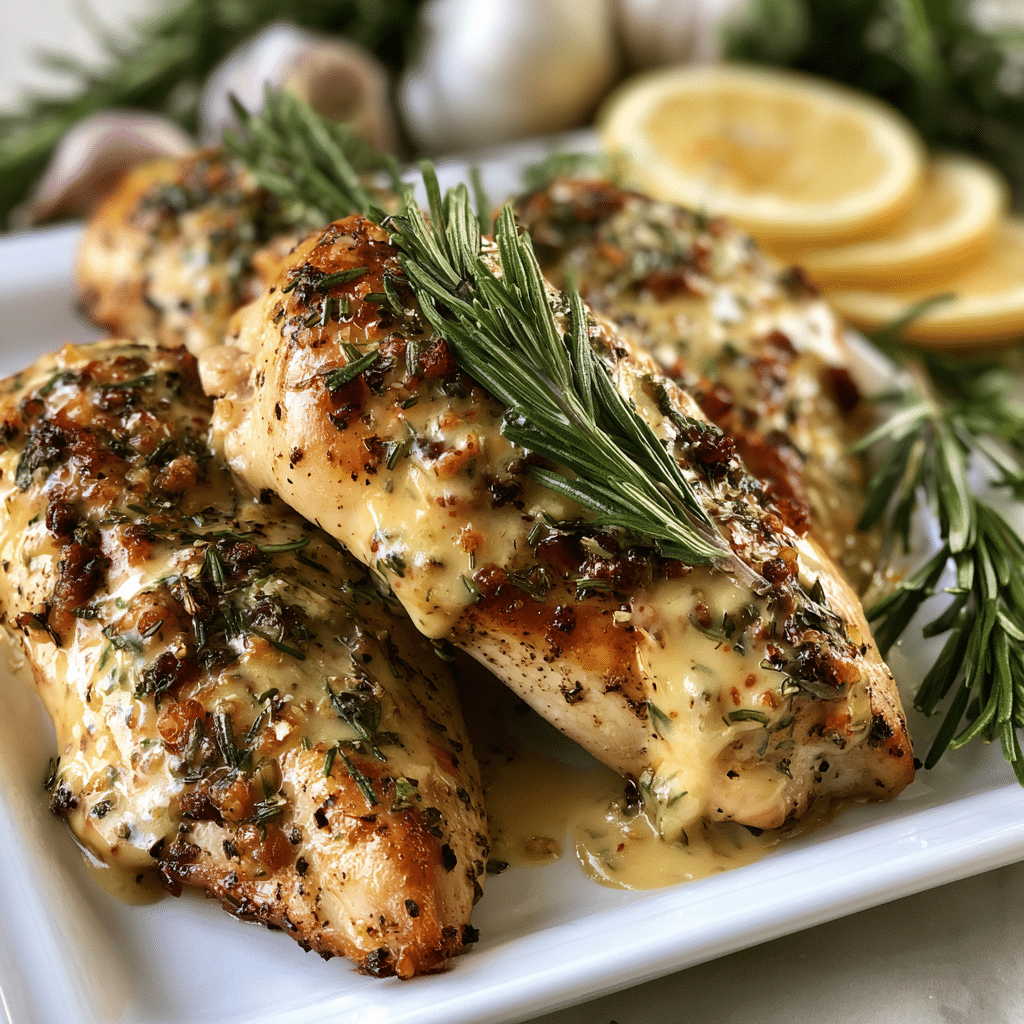
Rosemary Dijon chicken is a seared chicken breast coated with a tangy, herbaceous sauce made from Dijon mustard, honey, and fresh rosemary, then finished in the oven. This elegant yet simple dinner combines sophisticated flavors in under 35 minutes.
Why You’ll Love This Recipe
- Tangy and herbaceous sauce balances savory mustard with sweet honey and aromatic rosemary
- Restaurant-quality results with minimal effort required from the cook
- Quick weeknight dinner ready in under 35 minutes from start to finish
- One-skillet cooking keeps prep and cleanup straightforward
- Naturally low-carb and gluten-free, fitting most dietary preferences
- Impressive enough for entertaining yet simple enough for family meals
Equipment Needed
- Small mixing bowl
- Whisk
- Large oven-safe skillet
- Meat thermometer
- Measuring spoons
- Pastry brush (for applying sauce)
- Tongs
Ingredients You’ll Need
For the Chicken
- 4 boneless, skinless chicken breasts
- 2 tablespoons olive oil
- Salt, to taste
- Black pepper, to taste
Dijon Rosemary Sauce
- 2 tablespoons Dijon mustard
- 2 tablespoons whole-grain Dijon mustard
- 2 tablespoons honey
- 2 tablespoons fresh rosemary, finely chopped
- 2 cloves garlic, minced
- 1 tablespoon fresh lemon juice
- 1 teaspoon lemon zest
Optional Garnish
- Fresh rosemary sprigs
- Lemon wedges
Ingredient Notes
Chicken breasts cook quickly and evenly when seared first then finished in the oven. Similar-sized breasts ensure uniform cooking and prevent some pieces from drying out while others finish.
Dijon mustard provides sharp, tangy depth and acts as an emulsifier that helps the sauce coat the chicken smoothly. Using both traditional and whole-grain varieties adds flavor complexity and appealing texture.
Fresh rosemary brings piney, aromatic notes that pair beautifully with the mustard’s tanginess and honey’s sweetness. Finely chopping it helps it distribute evenly throughout the sauce and adhere to the chicken.
Honey balances the sharp Dijon mustard with natural sweetness while helping the sauce caramelize slightly as the chicken finishes in the oven. This creates a glossy finish and rounded flavor profile.
Why These Ingredients Work
Searing the chicken over medium-high heat creates a golden crust that locks in moisture before the sauce is applied. This ensures juicy chicken rather than dry meat even after the oven baking.
The two-mustard combination brings both sharp tanginess and textural interest to the sauce. The whole-grain mustard’s seeds add crunch while the smooth Dijon provides a cohesive base.
Fresh rosemary’s aromatic oils bloom when heated gently, infusing the entire sauce with herbaceous depth. Paired with lemon zest and juice, it creates a bright, Mediterranean flavor profile.
Honey serves dual purposes—it sweetens the mustard-based sauce while helping it caramelize and glaze the chicken as it bakes. This prevents the sauce from tasting one-dimensional or overly sharp.
Step-by-Step Instructions
Make the Sauce
- Whisk together the Dijon mustard, whole-grain Dijon mustard, honey, chopped rosemary, garlic, lemon juice, and lemon zest in a small bowl until smooth.
Sear the Chicken
- Preheat the oven to 400°F (200°C).
- Pat the chicken breasts dry and season both sides with salt and black pepper.
- Heat the olive oil in a large oven-safe skillet over medium-high heat.
- Sear the chicken for 2–3 minutes per side, until lightly golden.
Apply Sauce and Bake
- Brush the Dijon rosemary mixture generously over the chicken.
- Transfer the skillet to the oven and bake for 15–20 minutes, or until the chicken reaches an internal temperature of 165°F (74°C).
Finish and Serve
- Let the chicken rest for 5 minutes before serving.
- Garnish with fresh rosemary sprigs and lemon wedges, if desired.
Pro Tips & Cooking Hacks
- Finely chop the fresh rosemary rather than using larger sprigs so it blends into the sauce smoothly and adheres better to the chicken
- Make the sauce ahead of time so you can focus on searing and baking the chicken without multitasking
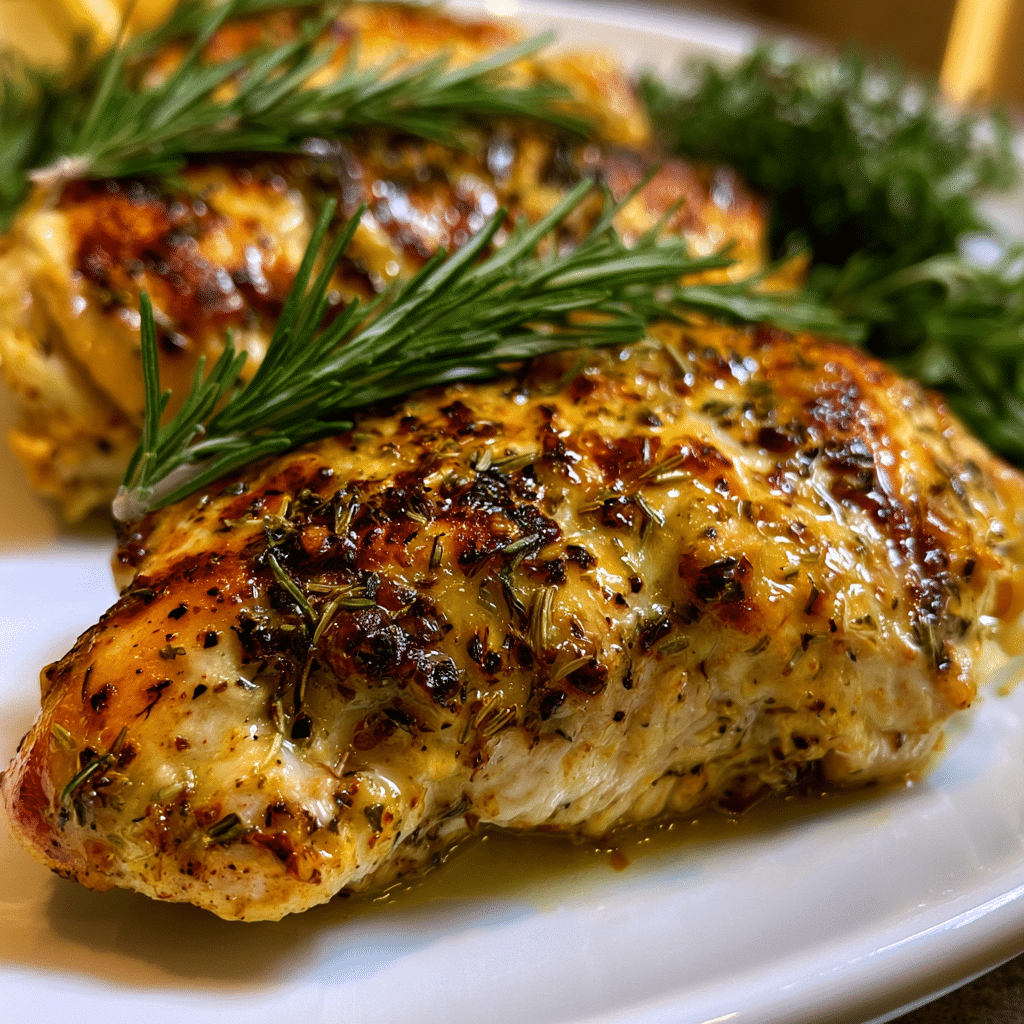
- Don’t skip the searing step—it builds flavor and creates texture contrast between the exterior and juicy interior
- Use a pastry brush to apply the sauce evenly across the chicken so every piece gets well coated
- Let the chicken rest after baking so juices redistribute and the meat stays tender rather than dry
Tips & Variations
Swap the honey for maple syrup for a deeper, more earthy sweetness in the sauce. This works beautifully with the rosemary and brings a seasonal fall flavor.
Add minced shallots to the sauce for extra aromatic depth and a touch of natural sweetness. Shallots pair beautifully with both Dijon mustard and fresh rosemary.
For a creamier sauce, stir in 2–3 tablespoons of crème fraîche or Greek yogurt after removing the skillet from the oven. This mellows the sharpness of the mustard while adding richness.
Serving Suggestions
Serve the chicken over creamy mashed potatoes or buttered egg noodles to soak up the tangy rosemary sauce. Both are comforting sides that complement the herbaceous flavors.
Pair with roasted root vegetables like carrots, parsnips, or beets for an elegant, earthy side. These roast easily in the same oven while the chicken finishes.
Add a simple green salad with a light lemon vinaigrette for fresh acidity and textural contrast. The peppery greens balance the rich sauce beautifully.
Crusty bread or warm dinner rolls are perfect for soaking up any extra sauce left on the plate. They round out the meal while echoing the savory, herbaceous flavors.
Common Mistakes to Avoid
Not searing the chicken before baking. Skipping this step misses the opportunity to build flavor and create a textured crust. Always sear over medium-high heat first.
Applying the sauce too early in cooking. Adding the sauce before searing prevents proper browning. Apply it only after searing is complete.
Using dried rosemary instead of fresh. Dried rosemary doesn’t provide the bright, aromatic quality this sauce needs. Fresh rosemary is essential for the best flavor.
Overbaking the chicken. Extra time in the oven dries out the meat even with the protective sauce coating. Check the internal temperature at 15 minutes rather than waiting for the full 20.
Skipping the resting period. Cutting into the chicken immediately releases juices that should stay locked inside. Let it rest for 5 minutes so the meat reabsorbs the moisture.
What to Serve With Rosemary Dijon Chicken
Creamy mashed potatoes make an ideal side for catching the tangy rosemary sauce. Their smooth texture contrasts nicely with the seared chicken exterior.
Buttered egg noodles provide a comforting base that soaks up the sauce beautifully. Their soft texture pairs naturally with the herbaceous mustard coating.
Roasted Brussels sprouts or carrots add color and a slightly caramelized vegetable element. Both roast easily in the same oven as the chicken.
A crisp arugula salad with lemon vinaigrette brings fresh peppery flavor and acidity that balances the richness of the sauce. The cool greens contrast with the warm chicken.
Frequently Asked Questions
Can I use dried rosemary instead of fresh?
Dried rosemary can substitute in a pinch, but use only one tablespoon as dried herbs are more concentrated. Fresh rosemary provides superior flavor and the bright aromatics this sauce deserves.
How do I know when the chicken is fully cooked?
Use a meat thermometer inserted into the thickest part of the chicken to verify 165°F (74°C). This ensures accurate doneness without guesswork.
Can I make the sauce ahead of time?
Yes, prepare the sauce up to a day ahead and store it covered in the refrigerator. Bring it closer to room temperature before brushing it on the seared chicken.
What can I substitute for honey?
Maple syrup or agave nectar both work well as substitutes for honey. Each brings its own subtle flavor while serving the same sweetening and glazing purpose.
Can I cook this on the stovetop without the oven?
Yes, after searing the chicken and applying the sauce, cover the skillet and cook over medium-low heat for 12–15 minutes until the chicken reaches 165°F. Watch that the sauce doesn’t burn on the bottom.
Conclusion
Rosemary Dijon chicken delivers sophisticated, herbaceous flavors that taste like you spent hours in the kitchen when actually it comes together in under 35 minutes. The tangy mustard sauce balanced with honey and fresh rosemary transforms simple chicken breasts into an elegant dinner.
Print
Rosemary Dijon Chicken
- Total Time: 35 minutes
- Yield: 4 servings 1x
Description
Rosemary Dijon chicken is a seared chicken breast coated with a tangy, herbaceous sauce made from Dijon mustard, honey, and fresh rosemary, then finished in the oven. This elegant yet simple dinner combines sophisticated flavors in under 35 minutes.
Ingredients
4 boneless, skinless chicken breasts
2 tablespoons olive oil
Salt, to taste
Black pepper, to taste
2 tablespoons Dijon mustard
2 tablespoons whole-grain Dijon mustard
2 tablespoons honey
2 tablespoons fresh rosemary, finely chopped
2 cloves garlic, minced
1 tablespoon fresh lemon juice
1 teaspoon lemon zest
Fresh rosemary sprigs (for garnish)
Lemon wedges (for garnish)
Instructions
1. Whisk together the Dijon mustard, whole-grain Dijon mustard, honey, chopped rosemary, garlic, lemon juice, and lemon zest in a small bowl until smooth.
2. Preheat the oven to 400°F (200°C).
3. Pat the chicken breasts dry and season both sides with salt and black pepper.
4. Heat the olive oil in a large oven-safe skillet over medium-high heat.
5. Sear the chicken for 2–3 minutes per side, until lightly golden.
6. Brush the Dijon rosemary mixture generously over the chicken.
7. Transfer the skillet to the oven and bake for 15–20 minutes, or until the chicken reaches an internal temperature of 165°F (74°C).
8. Let the chicken rest for 5 minutes before serving.
9. Garnish with fresh rosemary sprigs and lemon wedges, if desired.
Notes
Finely chop the fresh rosemary rather than using larger sprigs so it blends into the sauce smoothly.
Make the sauce ahead of time so you can focus on searing and baking the chicken without multitasking.
Don’t skip the searing step—it builds flavor and creates texture contrast between the exterior and juicy interior.
Let the chicken rest after baking so juices redistribute and the meat stays tender rather than dry.
Store leftovers in an airtight container in the refrigerator for up to 3 days.
- Prep Time: 10 minutes
- Cook Time: 25 minutes
- Category: Main Course
- Method: Searing and Baking
- Cuisine: French
Nutrition
- Serving Size: 1 chicken breast
- Calories: 280
- Sugar: 5 g
- Sodium: 420 mg
- Fat: 12 g
- Saturated Fat: 2 g
- Unsaturated Fat: 9 g
- Trans Fat: 0 g
- Carbohydrates: 6 g
- Fiber: 0 g
- Protein: 36 g
- Cholesterol: 95 mg