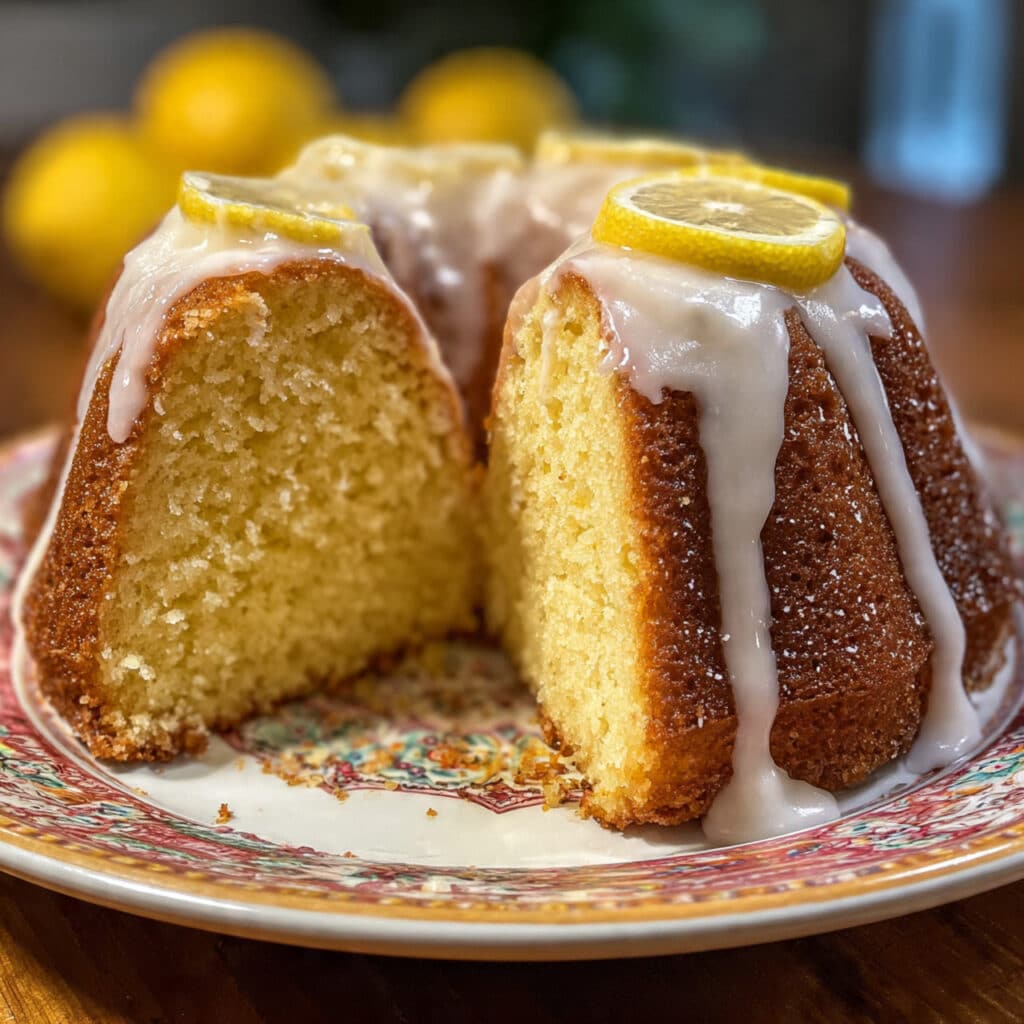
Italian Lemon Pound Cake is the bright, buttery dessert that brings la dolce vita straight to your American kitchen. This isn’t just another lemon cake, it’s a moist, tender masterpiece with a delicate crumb that melts on your tongue, packed with fresh lemon zest.
I first tasted this at my friend Maria’s Easter brunch, and after one bite of that golden, citrus-kissed slice, I begged for the recipe. Now it’s my go-to for spring gatherings, Mother’s Day brunches, and those moments when you need a little edible sunshine to brighten your day.

Why You’ll Love This Recipe
This Italian Lemon Pound Cake delivers bakery-quality results without the fuss or the price tag.
The combination of sour cream and milk creates an incredibly moist crumb that stays fresh for days, while fresh lemon zest and juice provide authentic citrus flavor that bottled extracts simply can’t match.
It’s versatile enough for casual weekend breakfasts yet elegant enough to serve at holiday dinners, and the optional lemon glaze adds that professional-looking finish that’ll have everyone asking if you secretly went to pastry school.
Plus, you probably have most ingredients in your pantry right now, making this an easy win for busy home cooks who want impressive results.
Equipment Needed
- 9×5-inch loaf pan
- Parchment paper or cooking spray and flour for pan prep
- Large mixing bowl
- Medium mixing bowl
- Electric hand mixer or stand mixer
- Whisk
- Rubber spatula
- Microplane or zester for lemon zest
- Measuring cups and spoons
- Wire cooling rack
- Small bowl (for glaze)
- Toothpick or cake tester

Italian Lemon Pound Cake
- Total Time: 3 hours
- Yield: 1 loaf (9×5-inch) 1x
Description
Moist and tender Italian Lemon Pound Cake made with fresh lemon zest, juice, and sour cream. This easy homemade lemon loaf cake features a buttery crumb and optional sweet lemon glaze. Perfect for brunch, dessert, or afternoon tea.
Ingredients
For the Cake:
- 3 cups all-purpose flour
- 1 teaspoon baking powder
- ½ teaspoon salt
- 1 cup unsalted butter, room temperature (2 sticks; can substitute salted butter but omit added salt)
- 1½ cups granulated sugar
- 3 large eggs, room temperature
- Zest of 2 lemons (about 2 tablespoons)
- ¼ cup fresh lemon juice (from about 1–2 lemons)
- ½ cup sour cream or plain Greek yogurt, room temperature
- ½ cup whole milk, room temperature (2% works too)
- 2 teaspoons vanilla extract
For the Lemon Glaze (Optional but Recommended):
- 1–1¼ cups powdered sugar (confectioners’ sugar)
- 2–3 tablespoons fresh lemon juice
- 1–2 teaspoons milk (for consistency)
- Pinch of lemon zest (optional garnish)
Instructions
Preheat your oven to 325°F (165°C)—yes, 325°F, not the usual 350°F, which helps prevent over-browning. Grease your 9×5-inch loaf pan thoroughly with butter or cooking spray, then dust with flour, tapping out the excess. For foolproof release, line the pan with parchment paper, leaving overhang on the long sides to act as handles.
In a medium bowl, whisk together 3 cups all-purpose flour, 1 teaspoon baking powder, and ½ teaspoon salt. Whisking aerates the flour and evenly distributes the leavening agents, ensuring your cake rises uniformly.
In a large bowl using an electric mixer on medium-high speed, beat the room-temperature butter and granulated sugar for 3–4 minutes until the mixture is light, fluffy, and pale yellow. This creaming process incorporates air bubbles that give your pound cake its tender structure
Add the eggs one at a time, beating well after each addition—about 30 seconds per egg. This ensures proper emulsification so your batter doesn’t separate. After all eggs are incorporated, mix in the lemon zest and vanilla extract, beating just until combined.
Here’s where technique matters: Add the dry ingredients in three additions, alternating with the sour cream and milk. Start and end with dry ingredients, following this pattern: dry → sour cream → dry → milk → dry. Mix on low speed after each addition just until the flour disappears—overmixing develops gluten and creates a tough, dense cake.
Using a rubber spatula, gently fold in the ¼ cup fresh lemon juice with 3–4 broad strokes. The acid from the lemon juice tenderizes the crumb and adds that bright citrus punch, but don’t overmix or you’ll deflate all those air bubbles you worked so hard to create.
Pour the batter into your prepared loaf pan and smooth the top with a spatula. Bake for 60–70 minutes, checking at the 60-minute mark by inserting a toothpick into the center—it should come out clean or with just a few moist crumbs. If the top is browning too quickly (usually after 45 minutes), tent it loosely with aluminum foil to prevent burning while the center finishes baking.
Let the cake cool in the pan for 15–20 minutes—this prevents it from breaking apart when you remove it. Run a butter knife around the edges to loosen, then lift out using the parchment paper handles or invert onto a wire rack. Cool completely before glazing, about 1–2 hours, or the glaze will melt right off.
In a small bowl, whisk together 1–1¼ cups powdered sugar with 2–3 tablespoons fresh lemon juice. Add milk 1 teaspoon at a time until you reach a pourable but thick consistency—it should drizzle slowly off a spoon. Once the cake is completely cool, pour the glaze over the top, letting it drip naturally down the sides. Sprinkle with extra lemon zest for a pop of color.
Notes
- Zest before juicing: Always zest your lemons before cutting and juicing them—it’s nearly impossible to zest a halved lemon.
- Don’t overmix: Once you add flour, mix only until you can’t see dry streaks. Overmixing creates tunnels and a dense, tough texture.
- Test doneness properly: Insert the toothpick into the center, not near the edges which cook faster. A few moist crumbs are perfect—completely clean means it’s overbaked.
- Prevent sinking: Make sure your baking powder is fresh (less than 6 months old) and your oven temperature is accurate—use an oven thermometer to check.
- Glaze consistency matters: Too thick and it won’t drip; too thin and it’ll soak right in. Aim for honey-like thickness.
- Prep Time: 20 minutes
- Cook Time: 70 minutes + 90 minutes
- Category: Dessert
- Method: Baking
- Cuisine: Italian
Nutrition
- Serving Size: 1 slice
- Calories: 425
- Sugar: 34g
- Sodium: 180mg
- Fat: 20g
- Saturated Fat: 12g
- Unsaturated Fat: 7g
- Trans Fat: 0g
- Carbohydrates: 57g
- Fiber: 1g
- Protein: 5g
- Cholesterol: 105mg
Ingredients You’ll Need
For the Cake:
- 3 cups all-purpose flour
- 1 teaspoon baking powder
- ½ teaspoon salt
- 1 cup unsalted butter, room temperature (2 sticks; can substitute salted butter but omit added salt)
- 1½ cups granulated sugar
- 3 large eggs, room temperature
- Zest of 2 lemons (about 2 tablespoons)
- ¼ cup fresh lemon juice (from about 1–2 lemons)
- ½ cup sour cream or plain Greek yogurt, room temperature
- ½ cup whole milk, room temperature (2% works too)
- 2 teaspoons vanilla extract
For the Lemon Glaze (Optional but Recommended):
- 1–1¼ cups powdered sugar (confectioners’ sugar)
- 2–3 tablespoons fresh lemon juice
- 1–2 teaspoons milk (for consistency)
- Pinch of lemon zest (optional garnish)
Ingredient Notes
Butter: Must be at room temperature for proper creaming—leave it out for 30–60 minutes or microwave for 5–7 seconds if you’re short on time. European-style butter adds extra richness if you want to splurge.
Lemons: Always use fresh lemons, never bottled juice. Meyer lemons create a sweeter, more floral cake, while regular Eureka lemons give you that classic tart punch. Zest before juicing and avoid the white pith underneath, which is bitter.
Sour Cream vs. Greek Yogurt: Both work beautifully. Sour cream gives a slightly richer flavor, while Greek yogurt adds a subtle tang and keeps things a bit lighter. Make sure it’s full-fat for best results.
Room Temperature Ingredients: This isn’t optional—cold eggs and dairy won’t incorporate properly and can cause a dense cake. Set everything out 30–45 minutes before baking.
Step-by-Step Instructions
Step 1: Preheat & Prep Your Pan
Preheat your oven to 325°F (165°C)—yes, 325°F, not the usual 350°F, which helps prevent over-browning. Grease your 9×5-inch loaf pan thoroughly with butter or cooking spray, then dust with flour, tapping out the excess. For foolproof release, line the pan with parchment paper, leaving overhang on the long sides to act as handles.
Step 2: Whisk Your Dry Ingredients
In a medium bowl, whisk together 3 cups all-purpose flour, 1 teaspoon baking powder, and ½ teaspoon salt. Whisking aerates the flour and evenly distributes the leavening agents, ensuring your cake rises uniformly.
Step 3: Cream the Butter and Sugar
In a large bowl using an electric mixer on medium-high speed, beat the room-temperature butter and granulated sugar for 3–4 minutes until the mixture is light, fluffy, and pale yellow. This creaming process incorporates air bubbles that give your pound cake its tender structure
Step 4: Add Eggs and Flavorings
Add the eggs one at a time, beating well after each addition—about 30 seconds per egg. This ensures proper emulsification so your batter doesn’t separate. After all eggs are incorporated, mix in the lemon zest and vanilla extract, beating just until combined.
Step 5: Alternate Wet and Dry Ingredients
Here’s where technique matters: Add the dry ingredients in three additions, alternating with the sour cream and milk. Start and end with dry ingredients, following this pattern: dry → sour cream → dry → milk → dry. Mix on low speed after each addition just until the flour disappears—overmixing develops gluten and creates a tough, dense cake.
Step 6: Fold in Fresh Lemon Juice
Using a rubber spatula, gently fold in the ¼ cup fresh lemon juice with 3–4 broad strokes. The acid from the lemon juice tenderizes the crumb and adds that bright citrus punch, but don’t overmix or you’ll deflate all those air bubbles you worked so hard to create.
Step 7: Bake to Golden Perfection
Pour the batter into your prepared loaf pan and smooth the top with a spatula. Bake for 60–70 minutes, checking at the 60-minute mark by inserting a toothpick into the center—it should come out clean or with just a few moist crumbs. If the top is browning too quickly (usually after 45 minutes), tent it loosely with aluminum foil to prevent burning while the center finishes baking.
Step 8: Cool Completely
Let the cake cool in the pan for 15–20 minutes—this prevents it from breaking apart when you remove it. Run a butter knife around the edges to loosen, then lift out using the parchment paper handles or invert onto a wire rack. Cool completely before glazing, about 1–2 hours, or the glaze will melt right off.
Step 9: Make the Lemon Glaze (Optional)
In a small bowl, whisk together 1–1¼ cups powdered sugar with 2–3 tablespoons fresh lemon juice. Add milk 1 teaspoon at a time until you reach a pourable but thick consistency—it should drizzle slowly off a spoon. Once the cake is completely cool, pour the glaze over the top, letting it drip naturally down the sides. Sprinkle with extra lemon zest for a pop of color.
Pro Tips & Cooking Hacks
- Room temperature trick: Forgot to take eggs out? Place them in a bowl of warm (not hot) water for 5–10 minutes. For butter, cut into small cubes to speed up softening.
- Zest before juicing: Always zest your lemons before cutting and juicing them—it’s nearly impossible to zest a halved lemon.
- Don’t overmix: Once you add flour, mix only until you can’t see dry streaks. Overmixing creates tunnels and a dense, tough texture.
- Test doneness properly: Insert the toothpick into the center, not near the edges which cook faster. A few moist crumbs are perfect—completely clean means it’s overbaked.
- Prevent sinking: Make sure your baking powder is fresh (less than 6 months old) and your oven temperature is accurate—use an oven thermometer to check.
- Glaze consistency matters: Too thick and it won’t drip; too thin and it’ll soak right in. Aim for honey-like thickness.
- Make it ahead: Bake the cake up to 2 days in advance, wrap tightly, and glaze the day you’re serving for maximum freshness.
Tips & Variations
Storage: Store the glazed cake at room temperature under a cake dome or wrapped in plastic wrap for up to 3 days. Unglazed cake can be wrapped tightly and frozen for up to 3 months—thaw overnight in the fridge and bring to room temperature before serving.
Make-Ahead Option: This cake actually improves on day two as the lemon flavor mellows and melds. Bake it a day ahead, wrap it well, and glaze just before serving for the freshest presentation.
Gluten-Free Swap: Use a 1:1 gluten-free flour blend (like King Arthur Measure for Measure) in place of all-purpose flour. The texture will be slightly denser but still delicious.
Dairy-Free Version: Substitute dairy-free butter, coconut yogurt for the sour cream, and almond or oat milk for the regular milk. The flavor will have subtle coconut notes but still works beautifully.
Boozy Twist: Add 1–2 tablespoons limoncello to the glaze for an adult version, or brush the warm cake with a lemon-limoncello syrup before glazing.
Lemon-Blueberry Variation: Fold 1 cup fresh blueberries (tossed in 1 tablespoon flour) into the batter before baking for a fruity twist.
Serving Suggestions
This Italian Lemon Pound Cake shines at spring and summer gatherings—serve thick slices alongside fresh berries and whipped cream for an elegant brunch dessert, or pair with vanilla ice cream for an after-dinner treat. The bright lemon flavor makes it perfect for Easter celebrations, Mother’s Day breakfast-in-bed, or garden party refreshments.
For a true Italian-inspired spread, serve it with espresso or cappuccino in the afternoon for merenda (Italy’s beloved snack time), or pair with a sweet dessert wine like Moscato d’Asti. It’s also wonderful toasted the next day and spread with a thin layer of lemon curd or mascarpone cheese for breakfast.
Common Mistakes
- Using cold ingredients: Cold butter won’t cream properly, and cold eggs can curdle the batter, creating a dense, uneven crumb. Always bring everything to room temperature first.
- Overmixing the batter: Once flour is added, mix only until combined. Overmixing develops gluten, resulting in tough, tunneled cake with a peaked top.
- Skipping the creaming step: Properly creaming butter and sugar for the full 3–4 minutes is crucial for a light, tender texture. Shortcuts here mean dense cake.
- Overbaking: Pound cake continues cooking from residual heat, so pull it when a toothpick has a few moist crumbs, not when completely dry.
- Glazing while warm: Patience pays off—glazing a warm cake means runny, absorbed glaze instead of that beautiful drizzled coating.
- Using bottled lemon juice: Fresh is essential. Bottled juice tastes artificial and lacks the aromatic oils from fresh zest that make this cake special.
What to Serve With Italian Lemon Pound Cake
This versatile cake pairs beautifully with afternoon tea or coffee, making it ideal for casual get-togethers or book club meetings. The tangy lemon flavor balances rich dishes, so it’s perfect after a heavy pasta dinner or hearty Sunday roast. For a stunning dessert table, serve it alongside fresh strawberries, mascarpone whipped cream, and a bowl of mixed berries—the simplicity lets the cake’s bright flavor shine while offering guests options to customize their slice.
Frequently Asked Questions
Can I use a different pan size?
Yes, but adjust baking time accordingly. Two 8×4-inch loaf pans will bake in 45–55 minutes, while a 10-inch bundt pan needs 50–60 minutes. A 9×13-inch pan works too but check at 35–40 minutes. Always use the toothpick test for doneness regardless of pan size.
Why is my pound cake dense?
Dense pound cake usually results from overmixing after adding flour, using cold ingredients that don’t incorporate properly, or expired baking powder. Make sure to cream the butter and sugar fully, bring all ingredients to room temperature, and mix gently once flour is added.
Can I make this without a mixer?
Absolutely! Use a wooden spoon and some elbow grease to cream the butter and sugar—it’ll take 5–7 minutes of vigorous stirring. A whisk works great for beating in the eggs. The result will be just as delicious, though your arm might get a workout.
How do I know when it’s fully baked?
Insert a toothpick or cake tester into the center of the loaf. It should come out clean or with just a few moist crumbs clinging to it. The top should be golden brown and spring back lightly when touched, and the internal temperature should read 200–205°F on an instant-read thermometer.
Can I reduce the sugar?
You can reduce the granulated sugar by up to ¼ cup without drastically affecting texture, though the cake will be less sweet and the crust won’t caramelize as beautifully. Pound cake by nature is a sweet, buttery cake, so reducing sugar too much changes its fundamental character.
💬 Tried this Italian Lemon Pound Cake? Leave a comment and rating below! Share your favorite variations or serving suggestions