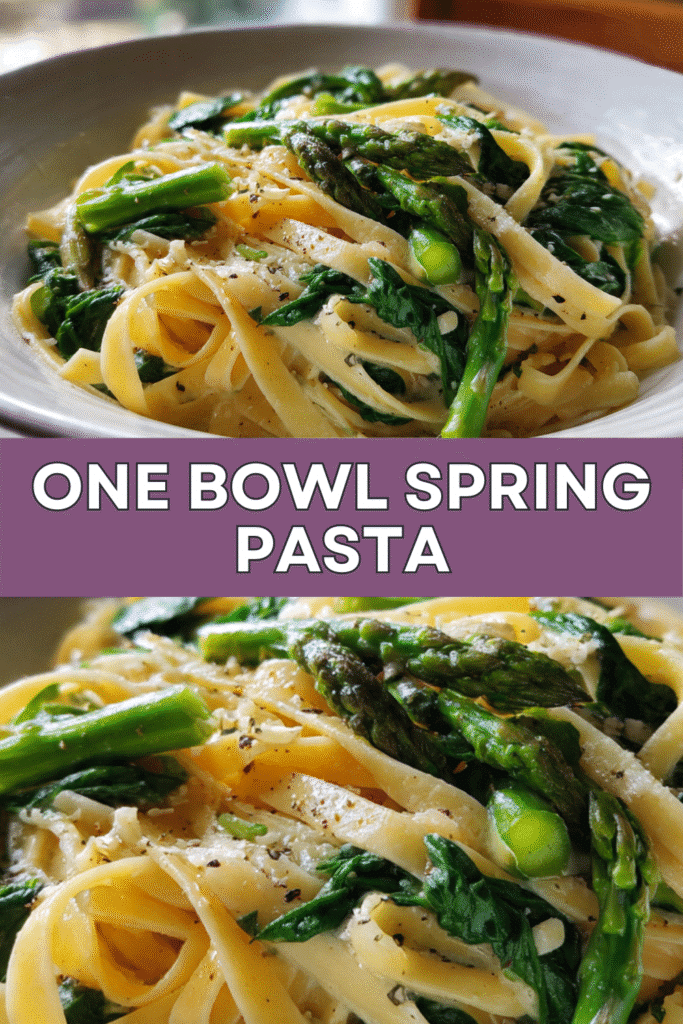
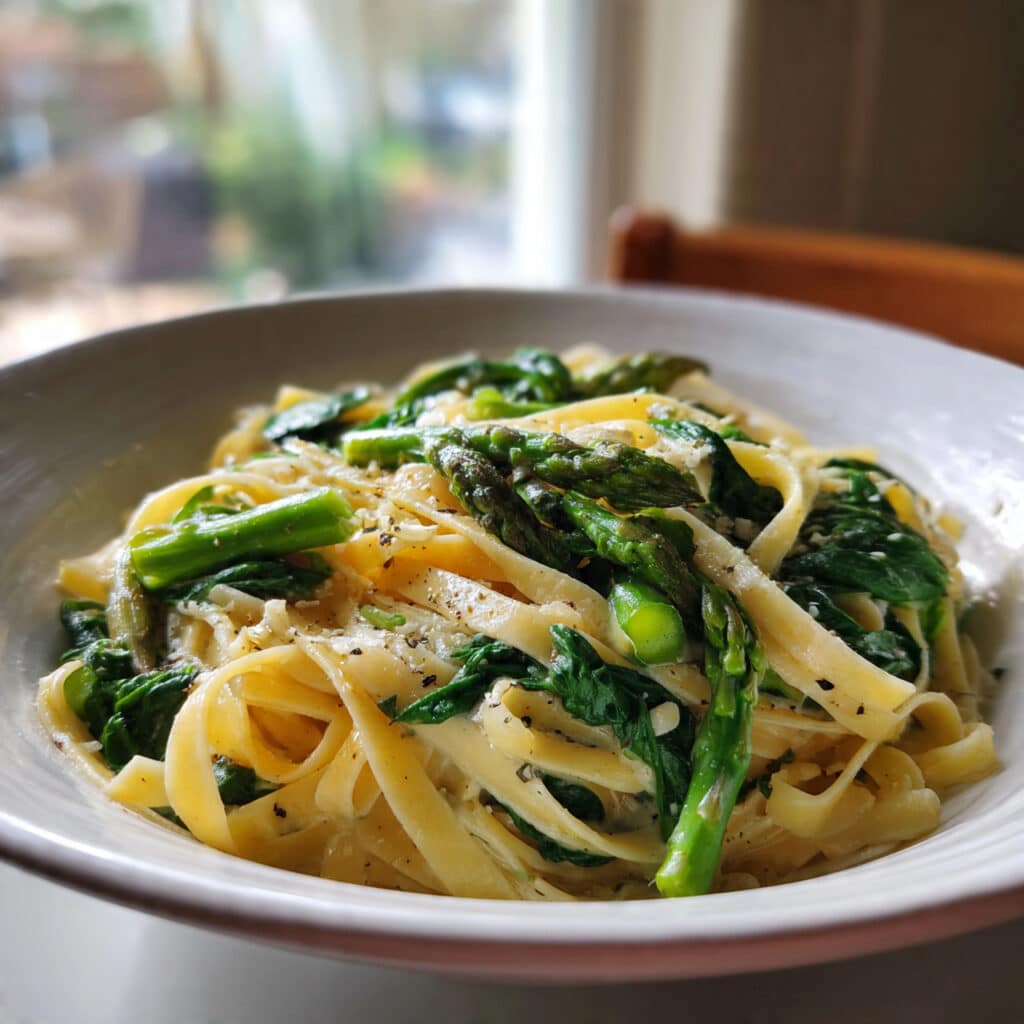
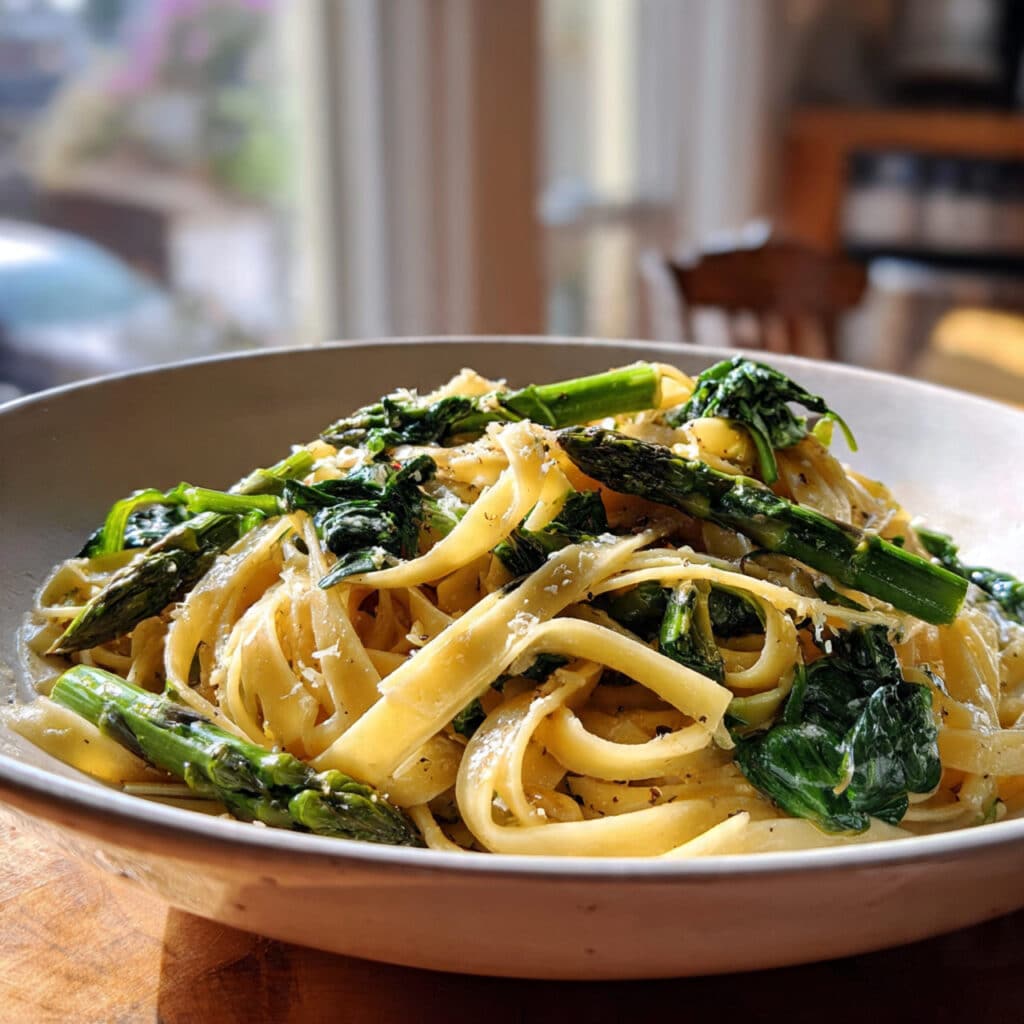
Fettuccine with Spinach and Asparagus turns a handful of fresh spring vegetables into a silky, restaurant-quality pasta dinner. The creamy blended spinach sauce coats every ribbon of fettuccine with vibrant green color and deep, savory flavor, while tender asparagus pieces and sweet peas add texture and color throughout the bowl.
Why You’ll Love This Recipe
- Creamy without feeling heavy — blending spinach with cream and Parmesan creates a velvety sauce that coats the pasta richly without the dense, gut-bomb feeling of a thick Alfredo.
- Gorgeous green color — the blended spinach sauce turns a vibrant, eye-catching green that makes this dish look as good as it tastes.
- Complete meal in one bowl — starch, vegetables, and dairy protein all in a single pasta dish, ready in under 30 minutes.
- Easily adaptable — make it dairy-free with coconut milk, gluten-free with your favorite pasta, or protein-packed with added chicken or shrimp.
- Picky-eater approved — the creamy, cheesy sauce makes the vegetables appealing even to family members who normally avoid greens.
Equipment Needed
- Large pot for boiling pasta
- Large skillet or wide saucepan
- Blender or immersion blender
- Colander or strainer
- Liquid measuring cup (to reserve pasta water)
- Sharp knife and cutting board
Fettuccine with Spinach and Asparagus
- Total Time: 25 minutes
- Yield: 4 servings 1x
- Diet: Vegetarian
Description
Fettuccine with Spinach and Asparagus is a creamy, veggie-packed spring pasta that comes together in just 25 minutes. Baby spinach blends with heavy cream into a silky, vibrantly green sauce that coats every strand of pasta.
Ingredients
- 12 oz fettuccine pasta
- 2 tbsp olive oil
- 3 cloves garlic, minced
- 4 oz fresh baby spinach (about 4 packed cups)
- ½ cup heavy cream
- ½ cup freshly grated Parmesan cheese, plus more for serving
- ½ cup pasta cooking water, reserved before draining
- 1 lb asparagus, trimmed and cut into 2-inch pieces
- 1 cup frozen peas
- 1 tsp lemon zest
- 1 tbsp fresh lemon juice
- ½ tsp kosher salt, plus more to taste
- ¼ tsp black pepper
- Fresh basil or parsley for garnish
Instructions
1. Bring a large pot of generously salted water to a boil. Cook the fettuccine according to package directions until al dente. Before draining, scoop out ½ cup of the starchy pasta cooking water and set it aside. Drain the pasta.
2. Heat olive oil in a large skillet over medium heat. Add the garlic and cook for 1 minute until fragrant. Add the baby spinach in batches, stirring between additions, and cook for 2–3 minutes until completely wilted.
3. Transfer the wilted spinach and garlic to a blender. Add the heavy cream and ¼ cup of the reserved pasta water. Blend until completely smooth and vibrantly green. Pour the sauce back into the skillet over low heat and stir in the Parmesan until melted and fully incorporated.
4. Bring a small pot of salted water to a boil. Add the asparagus pieces and cook for 2 minutes. Add the frozen peas and cook for 1 more minute. Drain immediately and rinse under cold water to stop the cooking and preserve the vivid green color.
5. Add the cooked fettuccine, blanched asparagus, and peas to the skillet with the spinach sauce. Toss everything over medium-low heat, adding the remaining pasta water a splash at a time until the sauce coats every strand. Stir in lemon zest and lemon juice, season with salt and pepper, and serve immediately topped with extra Parmesan and fresh herbs.
Notes
- Reserve pasta water before draining — the starch it contains binds the sauce to the pasta and prevents separation.
- Rinse the blanched vegetables under cold water immediately after draining to lock in their bright green color.
- Blend the spinach sauce until completely smooth — any chunks of spinach left in the sauce detract from the silky, creamy texture.
- For vegan: replace heavy cream with full-fat canned coconut milk and swap Parmesan for 3 tbsp nutritional yeast.
- Add grilled shrimp, sliced chicken, or a can of drained white beans at serving time for a protein boost.
- Serve immediately — this pasta thickens quickly as it sits. Loosen with a splash of warm water and toss over low heat before reheating.
- Prep Time: 10 minutes
- Cook Time: 15 minutes
- Category: Pasta & One Pot
- Method: Stovetop
- Cuisine: Italian-American
Nutrition
- Calories: 510
- Sugar: 5g
- Sodium: 420mg
- Fat: 20g
- Saturated Fat: 9g
- Unsaturated Fat: 9g
- Trans Fat: 0g
- Carbohydrates: 66g
- Fiber: 7g
- Protein: 19g
- Cholesterol: 55mg
Ingredients You’ll Need
- 12 oz fettuccine
- Salt, for the pasta water
- For the Creamy Spinach Sauce:
- 2 tbsp extra-virgin olive oil
- 3 garlic cloves, minced
- 4 cups fresh spinach, roughly chopped
- 1 cup heavy cream (or full-fat coconut milk for dairy-free)
- ½ cup freshly grated Parmesan cheese (or nutritional yeast for vegan)
- ½ tsp kosher salt
- ¼ tsp ground black pepper
- Pinch of ground nutmeg (optional)
- 1 tbsp fresh lemon juice
- For the Vegetables:
- 1 bunch green asparagus, trimmed and cut into 2-inch pieces
- 1 cup green peas (fresh or frozen)
- For Garnish:
- 2 tbsp fresh basil, chopped
- 2 tbsp pine nuts or slivered almonds, toasted (optional)
- Extra Parmesan and lemon zest, for finishing
Ingredient Notes
Spinach: Fresh spinach produces the most vibrant green sauce — it blends into a smooth, intensely colored sauce that makes this dish visually stunning. Frozen spinach works as a substitute: thaw it completely and squeeze out every bit of excess moisture before adding it to the pan, or the sauce will be watery rather than silky. Baby spinach has the mildest flavor and blends to the smoothest texture.
Heavy cream: Full-fat heavy cream creates the richest, most stable sauce that coats the pasta beautifully. For a dairy-free version, full-fat canned coconut milk works remarkably well — the coconut flavor mellows significantly once the garlic, spinach, and Parmesan go in. Half-and-half produces a thinner sauce that may not cling to the fettuccine as generously.
Reserved pasta water: Do not skip this step. The starchy water from cooking the pasta is one of the most valuable tools in pasta cookery — a splash or two thinned into a sauce that is too thick creates the glossy, emulsified consistency that makes restaurant pasta look and feel different from home cooking. Reserve at least ½ cup before draining the fettuccine.
Parmesan: Grate it from a block for the smoothest melt into the sauce. Pre-shredded Parmesan with anti-caking agents can create a slightly grainy sauce. A pinch of nutmeg sounds unusual but works as an amplifier for both the cream and the spinach — it adds warmth and depth without tasting like anything specific.
Step-by-Step Instructions
Step 1: Cook the Pasta
Bring a large pot of generously salted water to a boil. Add the fettuccine and cook according to the package directions until al dente — tender with just a slight bite in the center. Before draining, scoop out at least ½ cup of the starchy pasta water and set it aside. Drain the fettuccine and toss it lightly with a drizzle of olive oil to prevent sticking while you finish the sauce.
Step 2: Sauté the Garlic and Spinach
Heat the olive oil in a large skillet over medium heat. Add the minced garlic and cook for about 1 minute, stirring constantly, until fragrant but not browned. Add a pinch of salt as you stir — it helps draw out the moisture. Add the chopped spinach and cook for 2–3 minutes, stirring frequently, until the spinach wilts down completely and loses its raw, grassy smell.
Step 3: Blend the Spinach Sauce
Transfer the sautéed spinach and garlic to a blender. Add the heavy cream, Parmesan, salt, pepper, nutmeg if using, and lemon juice. Blend on high for about 30–45 seconds until the sauce is completely smooth and a vibrant, even green with no visible spinach pieces. Return the sauce to the skillet over low heat to keep it warm while you prepare the vegetables.
Step 4: Blanch the Vegetables
Bring a small saucepan of water to a boil. Add the asparagus pieces and cook for 2 minutes — they should turn bright green and become just barely tender. Add the peas and cook for 1 more minute. Drain immediately and transfer both vegetables to the skillet with the warm spinach sauce. Blanching rather than roasting keeps the asparagus bright green and crisp-tender, which contrasts beautifully with the silky sauce.
Step 5: Combine and Serve
Add the cooked fettuccine to the skillet with the spinach sauce and vegetables. Toss gently to coat every ribbon of pasta evenly. If the sauce looks too thick, add a splash of the reserved pasta water and toss again — the starchy water will loosen the sauce while keeping it smooth and glossy. Divide into bowls, scatter fresh basil and toasted pine nuts over each serving, and add extra Parmesan and lemon zest to finish. Serve immediately.
Pro Tips & Cooking Hacks
- Always save pasta water before draining — it is the most reliable way to adjust sauce consistency without thinning the flavor.
- Blend the sauce until completely smooth — visible chunks of spinach indicate under-blending, which produces an uneven, less appealing texture.
- Do not overcook the asparagus in the blanching step — 2 minutes is enough. It will warm through again when tossed with the hot pasta and sauce.
- Check the fettuccine 1 minute before the package recommends — al dente pasta holds its shape when tossed with the sauce, while overcooked pasta goes mushy.
- For a protein boost, stir in cooked rotisserie chicken or sautéed shrimp during the final toss with the pasta.
Tips & Variations
Make it vegan: Swap the heavy cream for full-fat canned coconut milk and use nutritional yeast instead of Parmesan. Nutritional yeast delivers a savory, slightly cheesy flavor that works very well in the blended sauce. Skip the Parmesan garnish or use a plant-based alternative. The dish remains luscious, creamy, and completely satisfying without any dairy.
Add heat: Stir ¼ tsp red pepper flakes into the olive oil with the garlic for a gentle, warming spice that runs through every bite. Increase to ½ tsp for a more assertive kick. The heat pairs particularly well with the sweetness of the peas and the brightness of the lemon. [Internal link: One Pot Orzo with Asparagus and Peas]
Different greens: Baby kale or Swiss chard can replace or supplement the spinach in the blended sauce — both produce a slightly earthier, more robust flavor. Blanch tougher greens for 1 minute before blending to soften them enough for a smooth sauce. The color will be a slightly deeper, less vibrant green, but the taste is equally satisfying. [Internal link: Roasted Asparagus and Carrots]
Serving Suggestions
Serve this pasta in wide, shallow bowls with an extra shower of freshly grated Parmesan and a lemon wedge on the side for squeezing. A few slices of crusty sourdough bread alongside make it a complete, satisfying meal without requiring any additional cooking. The green sauce and colorful vegetables make this dish a natural centerpiece at a spring dinner party. [Internal link: Oven Roasted Parmesan Asparagus]
For a lighter weeknight version, pair a smaller portion of the pasta with a simple arugula salad dressed with lemon juice and olive oil. The peppery arugula provides a sharp contrast to the creamy, rich sauce and rounds out the meal with less total heaviness. This pairing works especially well in warm weather when you want pasta but not the full richness of a winter cream sauce.
Common Mistakes
- Overcooking the pasta: Fettuccine should be al dente when it hits the sauce — it continues softening as it absorbs the cream. Overcooked pasta going into a cream sauce produces a limp, starchy mess.
- Forgetting to save pasta water: Without the starchy water, fixing an overly thick sauce means either adding plain water (which dilutes the flavor) or adding more cream (which makes the dish heavier). Reserve the water before you even think about draining.
- Under-blending the sauce: Chunky spinach pieces in the sauce create an uneven texture and appearance. Blend until completely smooth and uniformly green — 30–45 seconds at high speed in most blenders.
- Adding the sauce to a hot, empty pan and walking away: Heavy cream-based sauces can scorch quickly if left on medium or high heat without the pasta to absorb heat. Keep the sauce over the lowest possible heat while finishing the pasta.
- Overcooking the asparagus: Limp, gray-green asparagus is unappetizing in this dish. Keep the blanch short — 2 minutes — and let the residual heat from the sauce and pasta finish the job gently.
What to Serve With Fettuccine with Spinach and Asparagus
This pasta is rich enough to stand as the centerpiece of a dinner party without any additional main dish. A simple starter of sliced tomatoes with a drizzle of good olive oil and sea salt lets the pasta command the table. Crusty bread for soaking up any green sauce pooled at the bottom of the bowl is essentially mandatory — the sauce is too good to leave behind.
For a larger family dinner where a few different dishes are on the table, this pasta works beautifully alongside a simple roast chicken or baked salmon. The creamy green sauce complements rather than competes with the clean flavors of simply cooked protein, and the combination makes a meal that feels both seasonal and special.
Frequently Asked Questions
Can I make the spinach sauce ahead of time?
Yes — blend the sauce and refrigerate it in a sealed container for up to 2 days. Reheat gently over low heat, stirring in a splash of cream or pasta water to loosen it back to the right consistency before tossing with freshly cooked pasta.
What can I use instead of heavy cream?
Full-fat coconut milk is the closest dairy-free alternative and creates a similarly rich, luscious sauce. Half-and-half produces a thinner sauce. For the lightest version, use whole milk and add an extra tablespoon of Parmesan to help the sauce cling to the pasta.
How do I make this gluten-free?
Swap the fettuccine for your preferred gluten-free pasta — brown rice fettuccine or chickpea pasta both work well. Cook the gluten-free pasta slightly under the package instructions and toss it with the sauce immediately to avoid over-softening.
Can I use frozen peas?
Yes — add frozen peas directly to the blanching water in the last 1 minute of cooking. No need to thaw first. They defrost and heat through in the same time it takes the asparagus to finish its blanch.
How do I store and reheat leftovers?
Refrigerate in an airtight container for up to 3 days. Reheat gently in a skillet over medium-low heat with a splash of cream or reserved pasta water, stirring until the sauce loosens and coats the pasta again. The microwave works in a pinch — add a tablespoon of water, cover loosely, and heat in 30-second intervals.
💬 Tried this recipe? Leave a comment and rating below!