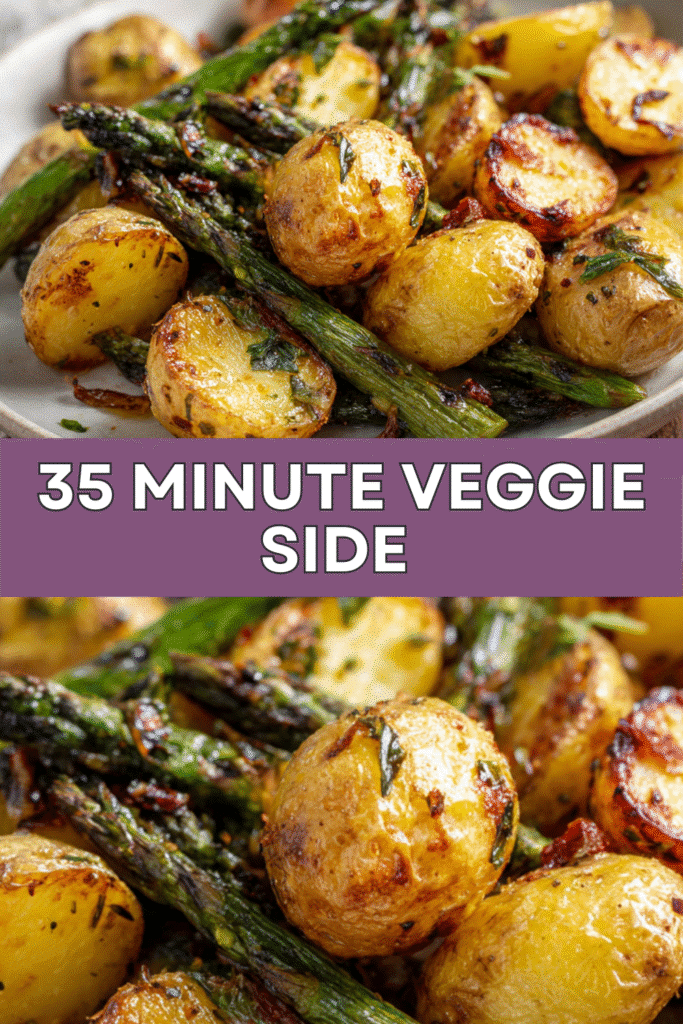
Garlic Herb Roasted Potatoes and Asparagus is the kind of one pan side dish that come out with crisp, golden edges and creamy centers, while the asparagus gets that tender-crisp, slightly caramelized finish that makes it taste extra special in 10 minutes of prep. It works for Tuesday chicken dinners, Saturday backyard cookouts, and holiday tables where you need a reliable vegetable side that requires almost no attention once it hits the oven.
Why You’ll Love This Recipe
- Minimal cleanup — one large baking sheet does all the work, and parchment paper means even that is easy to wash.
- Ready in 35 minutes — from cold ingredients to plated in well under an hour, including prep time.
- Budget-friendly and accessible — Yukon gold potatoes and asparagus are widely available and affordable year-round at any American grocery store.
- Naturally vegan and gluten-free — works for guests with most common dietary restrictions without any modifications.
- Deeply satisfying flavors — roasting concentrates the natural sugars in the potatoes and the herby, garlicky oil ties everything together beautifully.
Equipment Needed
- Large rimmed baking sheet
- Parchment paper
- Large mixing bowl
- Sharp knife and cutting board
Garlic Herb Roasted Potatoes and Asparagus
- Total Time: 35 minutes
- Yield: 4 servings 1x
Description
Garlic Herb Roasted Potatoes and Asparagus is the one-pan side dish that earns a permanent spot in any weeknight lineup. Golden, tender Yukon gold potatoes and crisp-tender asparagus roast together with garlic, oregano, and a bright lemon finish. All on a single baking sheet with barely 10 minutes of prep.
Ingredients
- 1½ lbs Yukon gold potatoes, cut into 1-inch pieces
- 1 lb fresh asparagus, woody ends trimmed, cut into 2-inch pieces
- 3 tbsp olive oil, divided
- 4 cloves garlic, minced
- 1 tsp dried oregano
- ½ tsp garlic powder
- ½ tsp onion powder
- ½ tsp kosher salt
- ¼ tsp black pepper
- 1 tbsp fresh lemon juice (added after roasting)
- Optional garnish: 2 tbsp fresh parsley, chopped, and lemon zest
Instructions
1. Preheat the oven to 400°F. Line a large rimmed baking sheet with parchment paper or foil. Cut the potatoes into uniform 1-inch pieces so every cube roasts at the same rate.
2. Place the potato pieces on the baking sheet. Drizzle with 2 tbsp olive oil and add garlic, oregano, garlic powder, onion powder, salt, and pepper. Toss until every piece is evenly coated, then spread into a single layer.
3. Roast the potatoes for 15 minutes until the edges start to turn golden. While the potatoes roast, toss the asparagus pieces with the remaining 1 tbsp olive oil and a pinch of salt in a bowl.
4. Remove the pan from the oven. Flip the potatoes and add the asparagus in the spaces around them. Return to the oven for 10 more minutes until the potatoes are golden and crispy and the asparagus is tender with lightly caramelized tips.
5. Remove from the oven and immediately squeeze fresh lemon juice over everything. Transfer to a serving dish, top with fresh parsley and lemon zest, and serve.
Notes
Cut potatoes into uniform 1-inch pieces — uneven sizes roast at different rates and leave some pieces undercooked while others overcook.
Roast the potatoes alone for the first 15 minutes — asparagus cooks much faster and turns mushy if both vegetables go in at the same time.
Add lemon juice after roasting only — juice on a hot pan before roasting creates steam and prevents caramelization.
Pat potatoes dry before seasoning and ensure they spread in a single layer for the crispiest result.
Swap oregano for Italian seasoning, rosemary, or smoked paprika for a different flavor direction.
All ingredients are naturally gluten-free — no modifications needed.
Store leftovers in an airtight container in the refrigerator for up to 4 days. Reheat at 400°F for 8–10 minutes.
- Prep Time: 10 minutes
- Cook Time: 25 minutes
- Category: Side Dishes
- Method: Roasting
- Cuisine: American
Nutrition
- Serving Size: ¼ of recipe
- Calories: 255
- Sugar: 3g
- Sodium: 295mg
- Fat: 11g
- Saturated Fat: 1.5g
- Unsaturated Fat: 8.5g
- Trans Fat: 0g
- Carbohydrates: 34g
- Fiber: 5g
- Protein: 5g
- Cholesterol: 0mg
Ingredients You’ll Need
- 1½ lbs Yukon gold potatoes, cut into 1-inch pieces
- 1 lb fresh asparagus, woody ends trimmed
- 4 garlic cloves, minced
- ¼ cup extra-virgin olive oil
- 1 tsp dried oregano
- ½ tsp kosher salt
- ¼ tsp freshly ground black pepper
- 2 tbsp fresh lemon juice (from about 1 lemon), for finishing
- 2 tbsp chopped fresh flat-leaf parsley, for garnish
Ingredient Notes
Yukon gold potatoes: Yukon golds are the best choice for roasting — their naturally buttery, creamy interior gets tender and fluffy while the cut surfaces turn golden and slightly crisp at the edges. Red potatoes or fingerlings work as substitutes with similar results. Russets can also be used, though they tend to dry out more at the edges before the center cooks through. Cut all pieces to a uniform 1-inch size so every chunk finishes cooking at the same time.
Garlic: Fresh minced garlic at 400°F can burn before the potatoes finish cooking, which turns it bitter. If you are sensitive to burnt garlic, substitute 1 tsp garlic powder mixed into the oil — it delivers consistent garlic flavor throughout the dish without the burning risk. Fresh minced garlic works well when tossed thoroughly in oil, which provides some protection, but keep an eye on the pan in the final few minutes.
Lemon juice: The lemon goes on after roasting, not before. Citrus juice added before the oven evaporates and can make the vegetables brown unevenly. A generous squeeze right off the pan brightens the entire dish and cuts through the richness of the olive oil beautifully.
Step-by-Step Instructions
Step 1: Preheat and Prep
Preheat the oven to 400°F. Line a large rimmed baking sheet with parchment paper. Cut the Yukon gold potatoes into uniform 1-inch pieces — consistent size is the key to even cooking, so take a moment to cut any large pieces down to match the smaller ones. Trim the woody ends off the asparagus spears.
Step 2: Season and Toss
Add the potato pieces and asparagus to a large bowl. Drizzle in the olive oil, then add the minced garlic, oregano, salt, and pepper. Toss everything together with your hands until every vegetable is thoroughly coated in the garlicky, herby oil. Make sure no dry patches remain — well-coated vegetables roast evenly and caramelize properly.
Step 3: Spread on the Pan
Spread the seasoned vegetables across the prepared baking sheet in a single layer, making sure the pieces do not overlap or pile on top of each other. Crowding the pan causes the vegetables to steam in their own moisture instead of roasting, which produces soft, pale results instead of golden, caramelized ones. If the pan looks full, use two pans instead of stacking.
Step 4: Roast and Flip
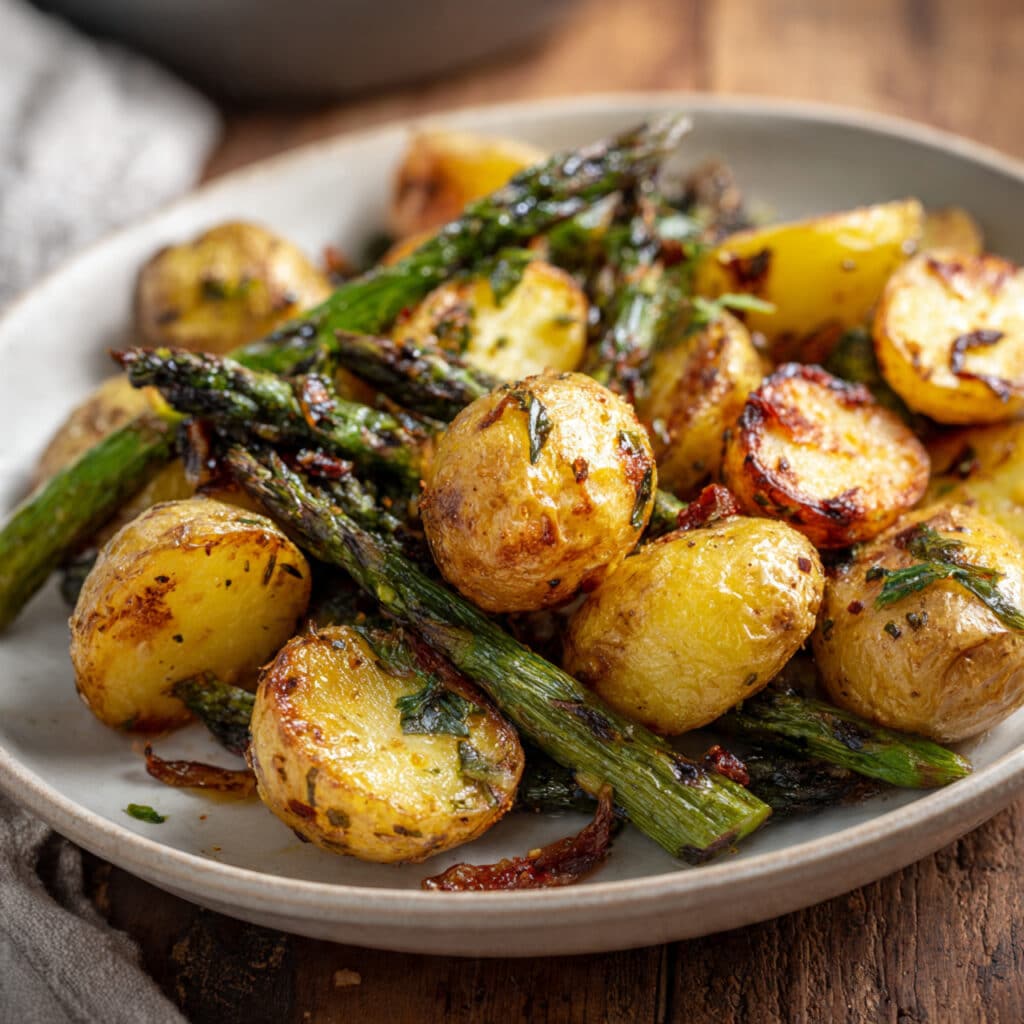
Roast at 400°F for 20–25 minutes, flipping the vegetables halfway through at the 10–12 minute mark. Flipping ensures golden color on multiple sides and prevents sticking. The potatoes are done when a fork slides through them easily and the cut surfaces look golden. The asparagus should look slightly caramelized at the tips with a bit of color along the edges.
Step 5: Finish and Serve
Pull the pan from the oven and immediately drizzle the fresh lemon juice over the hot vegetables. Scatter the chopped parsley over the top for color and freshness. Taste for salt and add a pinch more if needed. Serve straight from the pan or transfer to a serving platter.
Pro Tips & Cooking Hacks
- Cut all potato pieces to the same size — uneven cuts mean some pieces are mushy while others are still firm when the timer goes off.
- Do not overcrowd the pan — this is the single most important factor for crispy rather than soft roasted vegetables.
- If your asparagus is very thin compared to the potato pieces, add it to the pan during the last 10–12 minutes of cooking rather than from the start, so it does not overcook while the potatoes finish.
- Use a generous amount of oil — skimping leads to dry, chalky vegetables rather than properly roasted ones.
- Always use freshly squeezed lemon juice for finishing — bottled lemon juice lacks the brightness of fresh.
Tips & Variations
Parmesan version: Sprinkle 2–3 tablespoons of freshly grated Parmesan over the vegetables during the last 5 minutes of roasting. The cheese melts into the potatoes and crisps slightly on the asparagus for a savory, golden-edged finish.
Spicy version: Add ¼ tsp red pepper flakes to the oil mixture before tossing for a gentle, lingering heat that pairs well with the bright lemon finish. Increase to ½ tsp if you want a more pronounced kick. The heat works especially well when serving this side alongside rich proteins like pork or dark-meat chicken.
Add protein: Pre-cooked chickpeas, halved chicken sausage, or cubed tofu can roast right alongside the potatoes and asparagus for a complete one-pan meal. Add chickpeas from the beginning with the potatoes; add sausage during the last 10 minutes so it heats through without drying out.
Serving Suggestions
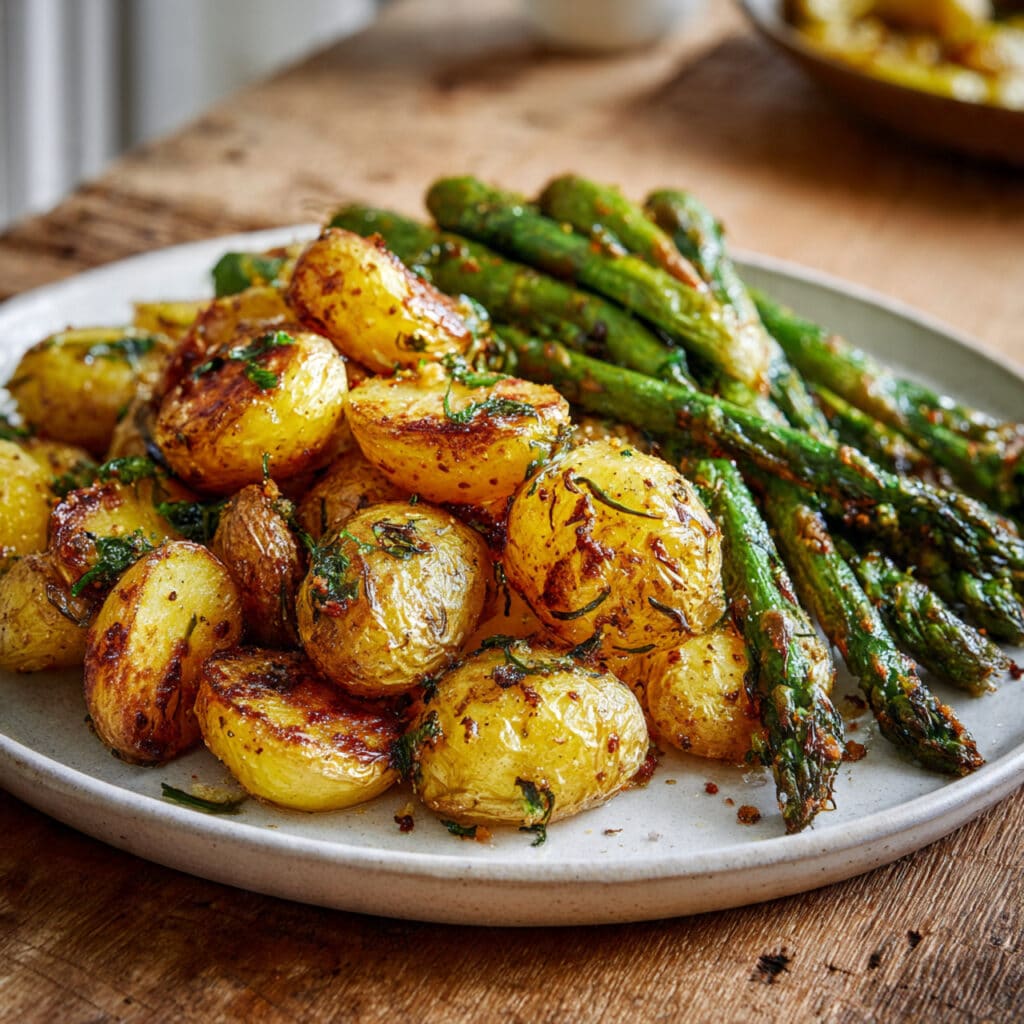
Garlic herb roasted potatoes and asparagus is the kind of side that works with everything in the American dinner playbook. Serve it alongside a simple grilled or baked chicken breast for the classic weeknight pairing — the lemon and garlic in the vegetables echo and elevate the flavors in the chicken without any redundancy. A piece of baked salmon or a flaky white fish works equally well for a lighter meal.
For a vegetarian or plant-based dinner, serve this over a bed of cooked farro or quinoa with a drizzle of tahini or a spoonful of plain Greek yogurt. The roasted vegetables on top of the grains with a creamy, tangy sauce makes a complete, balanced plate that satisfies without feeling heavy.
Common Mistakes
- Overcrowding the baking sheet: The number one enemy of roasted vegetables. Use two pans or roast in batches before the potatoes become a steamed pile instead of caramelized pieces.
- Unevenly cut potatoes: Small pieces burn before large ones finish cooking. Spend a minute cutting everything to a consistent 1-inch size.
- Adding lemon before roasting: Citrus burns and turns bitter at high heat. Always add lemon juice after the pan comes out of the oven.
- Not flipping halfway through: Without a flip at the midpoint, only the bottom surface of each piece caramelizes. A quick toss at the 12-minute mark makes the difference between pale vegetables and properly golden ones.
- Too little olive oil: Dry vegetables scorch instead of roast. Make sure every piece has an even, visible coating of oil before going into the oven.
What to Serve With Garlic Herb Roasted Potatoes and Asparagus
This side dish handles the starch and the vegetable component of any plate in a single serving, which makes dinner planning considerably simpler. All you need alongside is a well-seasoned protein — grilled chicken thighs, a pan-seared pork chop, or a simple roast beef come out of the oven or off the grill while this bakes in the background.
At a backyard cookout, this dish holds beautifully at room temperature for up to 30 minutes after coming out of the oven, which makes it ideal for feeding a group where timing is unpredictable. The lemon and parsley keep it bright and fresh-tasting even as it cools slightly — it never looks or tastes like tired leftovers, even when it has been sitting on the table for a while.
Frequently Asked Questions
What kind of potatoes work best for roasting?
Yukon golds are the top choice — their natural buttery flavor and waxy texture produce a creamy interior and golden exterior. Red potatoes and fingerlings also roast well. Russets work but tend to become drier at the edges before the center softens.
Can I use garlic powder instead of fresh garlic?
Yes — substitute 1 tsp garlic powder for the 4 fresh cloves. Garlic powder distributes more evenly through the oil and eliminates any risk of burning at high heat, which can make fresh garlic bitter if it ends up on the hot pan surface without enough oil coverage.
How do I know when the asparagus is perfectly cooked?
Perfectly roasted asparagus looks bright green with slightly caramelized, darker tips and yields to the touch but still has a slight spring back. Limp, olive-colored asparagus has gone past the ideal point — pull it at the first sign of tip browning.
Can I add other vegetables to this pan?
Bell pepper strips, broccoli florets, red onion wedges, and zucchini all roast at a similar temperature and timeline. Cut everything to similar sizes and avoid adding high-moisture vegetables like tomatoes — they release juice that steams the other vegetables before they can brown.
Is this recipe gluten-free?
Yes — all ingredients are naturally gluten-free. No modifications are needed.
💬 Tried this recipe? Leave a comment and rating below!