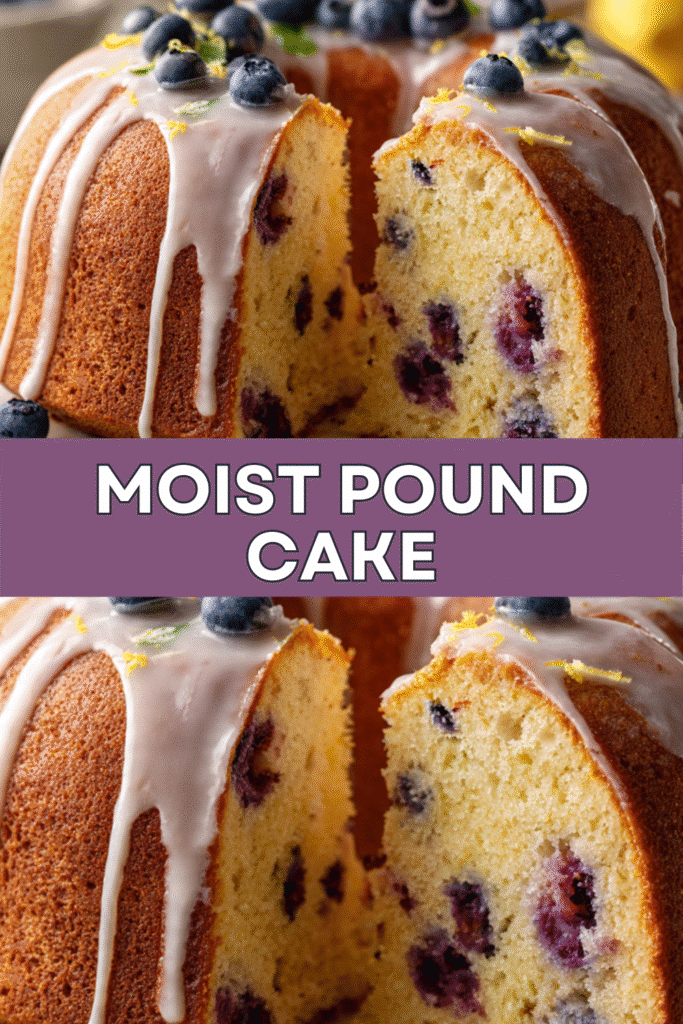
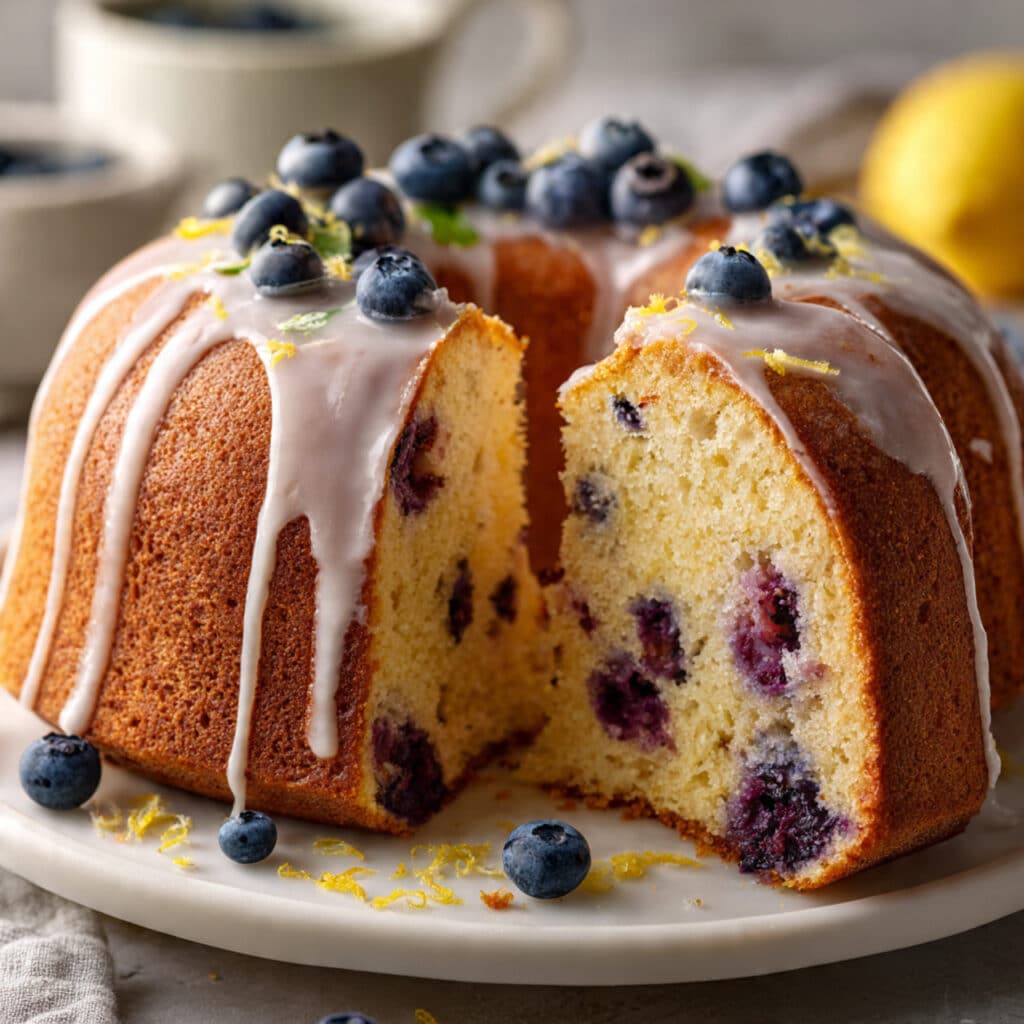
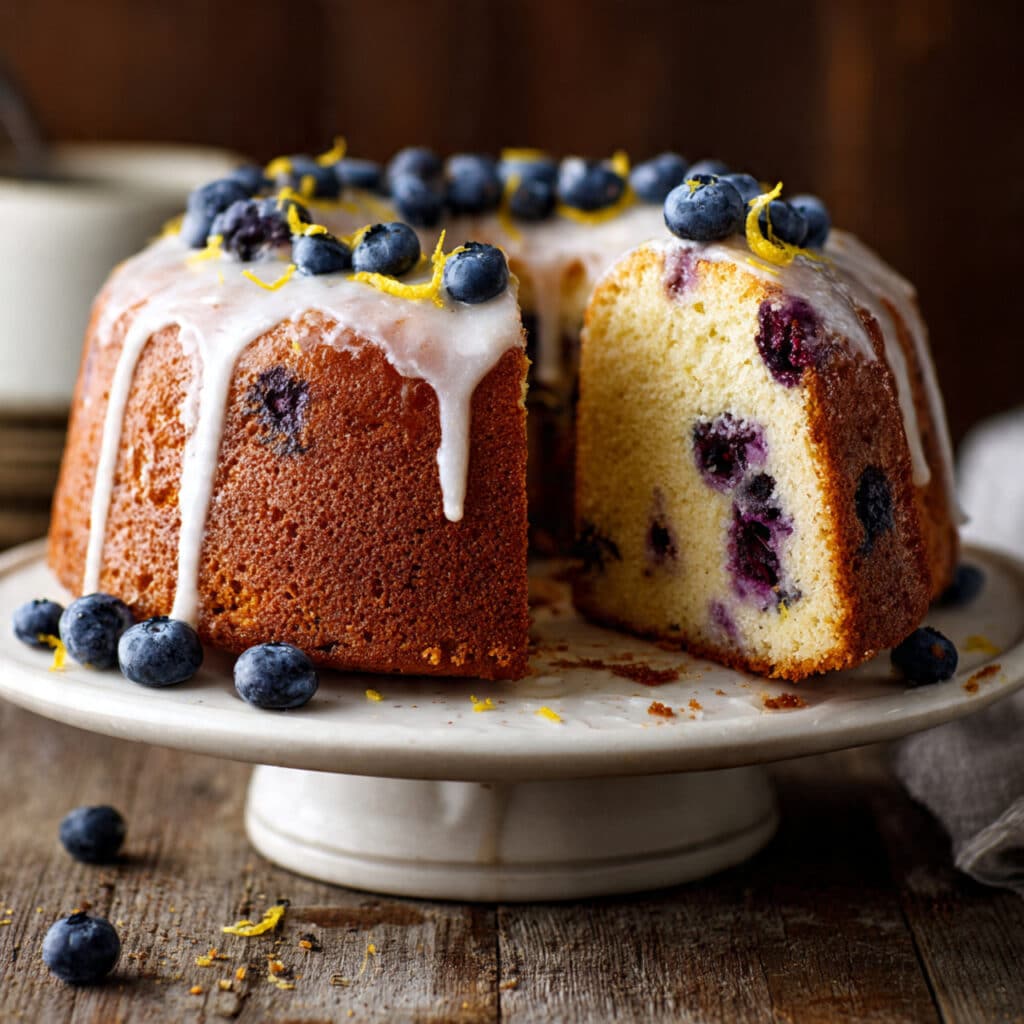
Lemon Blueberry Pound Cake delivers everything a great pound cake promises. Dense, rich, buttery crumb with a tight, even texture and layers in bright lemon zest, fresh lemon juice, lemon extract, and plump blueberries that pop in every slice. It bakes in a tube or bundt pan at 325°F for a long, low, even bake that produces that signature pound cake crumb without drying out.
Why You’ll Love This Recipe
- Classic pound cake texture — dense, moist, and buttery with a fine crumb that slices cleanly and holds together without crumbling.
- Triple lemon flavor — lemon zest, fresh lemon juice, and lemon extract layer together for a citrus punch that comes through in every bite.
- Sour cream keeps it moist — a full cup of sour cream substitutes for the traditional fourth pound of eggs and keeps the crumb tender rather than dry.
- Works in multiple pans — bake it in a tube pan, bundt pan, or two loaf pans depending on what you have available.
- Keeps for days and freezes beautifully — bake one to keep and one to freeze for later, or make a batch of loaves as gifts.
Equipment Needed
- 12-inch tube pan OR 12-cup bundt pan OR two 8×4-inch loaf pans
- Stand mixer or hand mixer
- Two large mixing bowls
- Rubber spatula
- Microplane or fine grater (for lemon zest)
- Wire cooling rack
- Knife (to loosen cake from pan after baking)
- Liquid measuring cup (for glaze)

Lemon Blueberry Pound Cake
- Total Time: 2 hours 30 minutes (includes cooling and glazing)
- Yield: 16 slices 1x
- Diet: Vegetarian
Description
Lemon Blueberry Pound Cake delivers a dense, moist, and buttery crumb with triple lemon flavor from zest, fresh juice, and lemon extract. A full cup of sour cream keeps every slice tender, and a flour-coating trick holds fresh blueberries suspended in the crumb instead of sinking.
Ingredients
LEMON BLUEBERRY POUND CAKE
3 cups all-purpose flour, plus 1 tbsp (reserved for coating blueberries)
1/2 tsp baking soda
3/4 tsp salt
2 tbsp lemon zest (from about 2 large lemons)
1 cup (2 sticks) salted butter, room temperature
2 1/2 cups granulated sugar
6 large eggs, room temperature
1 cup full-fat sour cream, room temperature
2 tbsp fresh lemon juice
1 1/2 tsp lemon extract
2 cups fresh blueberries, washed (leave slightly damp — the moisture helps the flour coating stick)
LEMON GLAZE
1 1/2 cups powdered sugar (confectioner’s sugar)
1/4 cup fresh lemon juice
2 tbsp whole milk (to thin if needed)
Zest of 1/2 lemon (for sprinkling over the glazed cake)
Instructions
1. PREPARE PAN AND MIX DRY INGREDIENTS: Preheat the oven to 325°F. Grease a 12-inch tube pan very thoroughly with butter or nonstick spray, reaching into every crevice. Whisk together the 3 cups of flour, baking soda, salt, and lemon zest in a medium bowl until well combined — the zest distributes evenly through the dry ingredients, which helps it disperse uniformly throughout the batter.
2. CREAM BUTTER AND SUGAR: Beat the room-temperature butter and granulated sugar together on medium speed for 3–4 minutes until the mixture turns pale, light, and significantly increased in volume. Proper creaming creates the structure the heavy batter needs to stay tender rather than dense and gummy.
3. ADD EGGS ONE AT A TIME: Add the room-temperature eggs one at a time, mixing on low to medium speed after each addition until fully incorporated before adding the next one. After all the eggs are in, the batter should look smooth and creamy. Rushing this step can break the batter.
4. ALTERNATE FLOUR AND SOUR CREAM: Add half of the flour mixture to the batter and mix on low speed just until combined. Add half of the sour cream and mix just until blended. Repeat with the remaining flour, then the remaining sour cream, mixing each addition just until it disappears into the batter — do not overmix. Add the fresh lemon juice and lemon extract and mix briefly until just combined.
5. ADD BLUEBERRIES AND FILL THE PAN: Toss the washed, slightly damp blueberries in the reserved 1 tablespoon of flour until each berry has a light coating. Optional but recommended: spoon a thin layer of plain batter — about 1/2 cup — into the bottom of the prepared tube pan before folding in the blueberries. This base layer catches berries that sink. Fold the flour-coated blueberries gently into the remaining batter with a rubber spatula using as few strokes as possible. Pour the batter into the prepared pan and smooth the top.
6. BAKE LOW AND SLOW: Bake at 325°F for 1 hour and 15 minutes, or until a toothpick inserted into the thickest part comes out clean. Start checking at the 1-hour mark — the top should be deep golden and the cake should pull slightly away from the sides. Remove from the oven and immediately run a thin knife around both the inner tube and the outer edge to loosen the cake. Cool in the pan for 10 minutes, then invert onto a wire rack to cool completely.
7. MAKE THE GLAZE AND FINISH THE CAKE: Once the cake has cooled completely, whisk together the powdered sugar, fresh lemon juice, and milk until the glaze is smooth and pourable — it should run off the whisk in a slow, steady ribbon. Add another tablespoon of milk if it seems too thick. Drizzle the glaze over the top of the cooled cake and let it run naturally down the sides. Immediately sprinkle the lemon zest from the half lemon over the wet glaze. Let the glaze set for 20–30 minutes before slicing and serving.
Notes
Pan Options: A 12-cup bundt pan or two 8×4-inch loaf pans work equally well. Loaf pans bake in the same time window — start checking at 1 hour.
Storage: Store at room temperature under a cake dome for up to 3 days, or refrigerate for up to 5 days. The glaze seals in moisture.
Freezing: Freeze individual slices wrapped in plastic wrap and foil for up to 3 months. Thaw at room temperature and drizzle with a fresh glaze before serving.
- Prep Time: 25 minutes
- Cook Time: 1 hour 15 minutes
- Category: Dessert
- Method: Baking
- Cuisine: American
Nutrition
- Serving Size: 1 slice
- Calories: 480
- Sugar: 56g
- Sodium: 230mg
- Fat: 18g
- Saturated Fat: 11g
- Unsaturated Fat: 6g
- Trans Fat: 0g
- Carbohydrates: 74g
- Fiber: 1g
- Protein: 6g
- Cholesterol: 120mg
Ingredients You’ll Need
Lemon Blueberry Pound Cake
- 3 cups all-purpose flour, plus 1 tbsp (reserved for coating blueberries)
- 1/2 tsp baking soda
- 3/4 tsp salt
- 2 tbsp lemon zest (from about 2 large lemons)
- 1 cup (2 sticks) salted butter, room temperature
- 2 1/2 cups granulated sugar
- 6 large eggs, room temperature
- 1 cup full-fat sour cream, room temperature
- 2 tbsp fresh lemon juice
- 1 1/2 tsp lemon extract
- 2 cups fresh blueberries, washed (do not dry completely — slight dampness helps the flour coating stick)
Lemon Glaze
- 1 1/2 cups powdered sugar (confectioner’s sugar)
- 1/4 cup fresh lemon juice
- 2 tbsp whole milk (to thin if needed)
- Zest of 1/2 lemon (for sprinkling over the glazed cake)
Ingredient Notes
Salted butter: This recipe calls for salted butter — a Southern baking tradition that adds subtle depth to the flavor. If you prefer unsalted butter, add an additional 1/4 teaspoon of salt to the dry ingredient mixture to compensate. Either way, make sure the butter is at genuine room temperature before creaming — pliable when pressed but not greasy or melted.
Sour cream: Full-fat sour cream creates the characteristic moist, dense crumb that defines this pound cake. It replaces the fourth pound of eggs used in traditional pound cake recipes and adds a gentle tang that complements the lemon beautifully. Do not substitute low-fat sour cream or Greek yogurt — both produce a noticeably drier texture.
Lemon extract: This is the ingredient that pushes the lemon flavor from pleasant to unmistakable. Fresh lemon juice provides brightness and fresh fruit character; lemon extract adds concentrated lemon intensity that survives the long 1-hour-plus bake time without fading. If lemon extract is unavailable, increase the fresh lemon juice to 3 tablespoons, though the flavor will be slightly less forward.
Blueberries and the flour trick: Wash the blueberries and toss them in the reserved tablespoon of flour while they are still slightly damp. The damp skin plus flour coating creates just enough grip to slow the berries from sinking entirely to the bottom of the cake. For additional insurance against sinking, spoon a small amount of plain batter — before the blueberries are folded in — into the bottom of the pan first, which creates a denser base layer.
Step-by-Step Instructions
Step 1: Prepare Pan and Mix Dry Ingredients
Preheat the oven to 325°F. Grease a 12-inch tube pan very thoroughly with butter or nonstick spray, reaching into every crevice. In a medium bowl, whisk together the 3 cups of flour, baking soda, salt, and lemon zest until well combined.
Step 2: Cream Butter and Sugar
Using a stand mixer or hand mixer, beat the room-temperature butter and granulated sugar together on medium speed for 3–4 minutes until the mixture turns pale, light, and significantly increased in volume.
Step 3: Add Eggs One at a Time
Add the room-temperature eggs to the butter and sugar mixture one at a time, mixing on low to medium speed after each addition until fully incorporated before adding the next one. Rushing this step or adding multiple eggs at once can cause the batter to break
Step 4: Alternate Flour and Sour Cream
Add half of the flour mixture to the batter and mix on low speed just until combined. Add half of the sour cream and mix just until blended. Repeat with the remaining flour, then the remaining sour cream, mixing each addition just until it disappears into the batter. Add the fresh lemon juice and lemon extract and mix briefly until just combined.
Step 5: Add Blueberries and Fill the Pan
Toss the washed, slightly damp blueberries in the reserved 1 tablespoon of flour until each berry has a light coating. Optional but recommended: spoon a thin layer of plain batter — about 1/2 cup — into the bottom of the prepared tube pan before folding in the blueberries. This base layer creates a denser bottom that helps catch berries that sink.
Fold the flour-coated blueberries gently into the remaining batter with a rubber spatula, using as few strokes as possible. Pour the batter into the prepared pan and smooth the top.
Step 6: Bake Low and Slow
Bake at 325°F for 1 hour and 15 minutes, or until a toothpick inserted into the thickest part of the cake comes out clean. Oven temperatures vary, so start checking at the 1-hour mark. The top should be deep golden and the cake should pull slightly away from the sides of the pan. Remove from the oven and immediately run a thin knife around both the inner tube and the outer edge to loosen the cake. Let the cake cool in the pan for 10 minutes, then invert onto a wire rack to cool completely.
Step 7: Make the Glaze and Finish the Cake
Once the cake has cooled completely, whisk together the powdered sugar, fresh lemon juice, and milk until the glaze is smooth and pourable. It should run off the whisk in a slow, steady ribbon — add another tablespoon of milk if it seems too thick. Drizzle the glaze over the top of the cooled cake and let it run naturally down the sides. Immediately sprinkle the lemon zest from the half lemon over the wet glaze. Let the glaze set for 20–30 minutes before slicing and serving.
Pro Tips & Cooking Hacks
- Always use room-temperature eggs, butter, and sour cream — cold ingredients cause the batter to curdle and produce an uneven crumb.
- Coat the blueberries while they are still slightly damp from washing — the damp skin creates a much better bond with the flour coating than dry berries.
- Add a thin layer of plain batter to the bottom of the pan before folding in the berries — this base layer provides extra density that slows berry sinking.
- Do not overmix after adding the flour — alternate additions require only enough mixing to just combine each one, not a full smooth-out between additions.
- Use a thin knife or skewer along both the inner and outer edges immediately after pulling the cake from the oven — doing this while the cake is still hot prevents it from sticking as it cools.
- Glaze only after the cake has cooled completely — a warm cake melts the glaze into the crumb instead of letting it set on the surface.
Tips & Variations
Loaf pan version for gifting: Divide the batter between two 8×4-inch loaf pans and reduce the bake time to approximately 55–65 minutes. Check for doneness with a toothpick at 55 minutes. Loaf pans make this cake an ideal homemade gift — wrap the cooled, glazed loaves in parchment and tie with twine for birthdays, holidays, or any occasion that calls for something thoughtful and homemade.
Frozen blueberries: Frozen blueberries work well in this recipe, especially when fresh are out of season. Rinse them under cold water to remove ice crystals, then pat dry with paper towels before tossing in flour. The extra moisture from frozen berries can occasionally cause the bottom of the cake to turn a faint blue-green color, which does not affect flavor at all.
Coconut addition: Several home bakers report that adding 1/2 cup of sweetened shredded coconut to the batter alongside the blueberries creates a tropical variation with an interesting texture contrast. Stir 2 tablespoons of coconut into the glaze as well for a visual and flavor connection between the topping and the cake.
Serving Suggestions
Lemon Blueberry Pound Cake belongs on a cake plate or stand where the glazed top and running sides show their best. Set the whole cake out at room temperature for a casual dessert table — a few fresh blueberries scattered around the base and a wedge of fresh lemon on the side add color without needing elaborate decoration. This cake genuinely improves over the first day as the lemon flavor deepens and the glaze softens slightly into the crust.
For a brunch or coffee hour, slice the cake into thin, even pieces and serve each one on a small plate alongside a cup of coffee or tea. Because the pound cake is rich and dense, thinner slices are often more satisfying than thick ones. A light dollop of whipped cream or a scoop of lemon sorbet alongside each slice elevates the presentation for a dinner party dessert course.
Common Mistakes
- Cold butter: Cold butter does not cream into light, fluffy ribbons — it stays chunky and produces a heavy, dense batter. Always start with room-temperature butter.
- Rushing the egg additions: Adding multiple eggs at once can break the emulsion and leave the batter looking curdled. Add one at a time and mix fully before the next.
- Overmixing after flour additions: Overworked gluten creates a tough, chewy crumb. Mix each flour addition until it just disappears — no more.
- Dry blueberries for flour coating: The flour coating does not adhere to dry berries. Always toss slightly damp blueberries in flour for the coating to stick and slow their descent.
- Skipping the knife loosening step: Running a knife around the edges immediately after baking is the difference between a clean release and a stuck cake. Do this while the cake is still hot.
- Glazing a warm cake: A warm cake melts the glaze straight into the crumb. The glaze needs a completely cooled surface to set into a visible, glossy layer.
What to Serve With Lemon Blueberry Pound Cake
Lemon Blueberry Pound Cake pairs naturally with coffee, hot tea, or a cold glass of milk. The dense, rich crumb and bright citrus glaze make it a natural partner for bitter beverages that cut through the sweetness. It works beautifully as a standalone brunch cake — no ice cream or toppings required, just a good sharp knife and clean plates.
For a dessert course, serve each slice with a small bowl of fresh blueberries and a drizzle of additional lemon glaze kept warm on the side for people who want an extra hit of citrus. A scoop of vanilla ice cream or a spoonful of lemon curd alongside adds richness without competing with the cake’s flavors.
Frequently Asked Questions
Can I use a bundt pan instead of a tube pan?
Yes — a 12-cup bundt pan works well for this recipe. Grease every groove thoroughly before adding the batter. The bake time may vary slightly; start checking for doneness at the 1-hour mark and add 5-minute increments as needed until a toothpick comes out clean. The glaze looks particularly beautiful drizzled over a bundt shape.
How do I store this cake and keep it moist?
Cover the cake tightly after glazing and store at room temperature for up to 3 days for the best texture. Refrigerating extends shelf life to 5 days, but brings the cake out 30 minutes before serving to let it come back to room temperature — cold pound cake tastes denser and drier than room-temperature pound cake.
Can I freeze this pound cake?
Yes — freeze the cake without the glaze, wrapped tightly in two layers of plastic wrap and then foil, for up to 3 months. Thaw overnight at room temperature, still wrapped, then glaze and serve once fully thawed. Glazing after thawing produces a much cleaner, glossier finish than glazing before freezing.
My blueberries all sank to the bottom — what can I do next time?
Two adjustments help: First, always coat slightly damp (not dry) blueberries in flour right before folding them in. Second, add a thin plain batter layer to the bottom of the pan before mixing in the berries — this denser base slows the descent of the berries significantly. Some sinking is normal and expected in any pound cake; it does not affect the flavor.
Can I use cake flour instead of all-purpose flour?
You can, but the result will be a lighter, softer crumb rather than the classic dense pound cake texture. All-purpose flour is traditional in pound cakes and produces the tight, rich crumb that defines the style. If you prefer a softer cake, cake flour works — just understand it changes the identity of the dessert.
💬 Tried this recipe? Leave a comment and rating below!