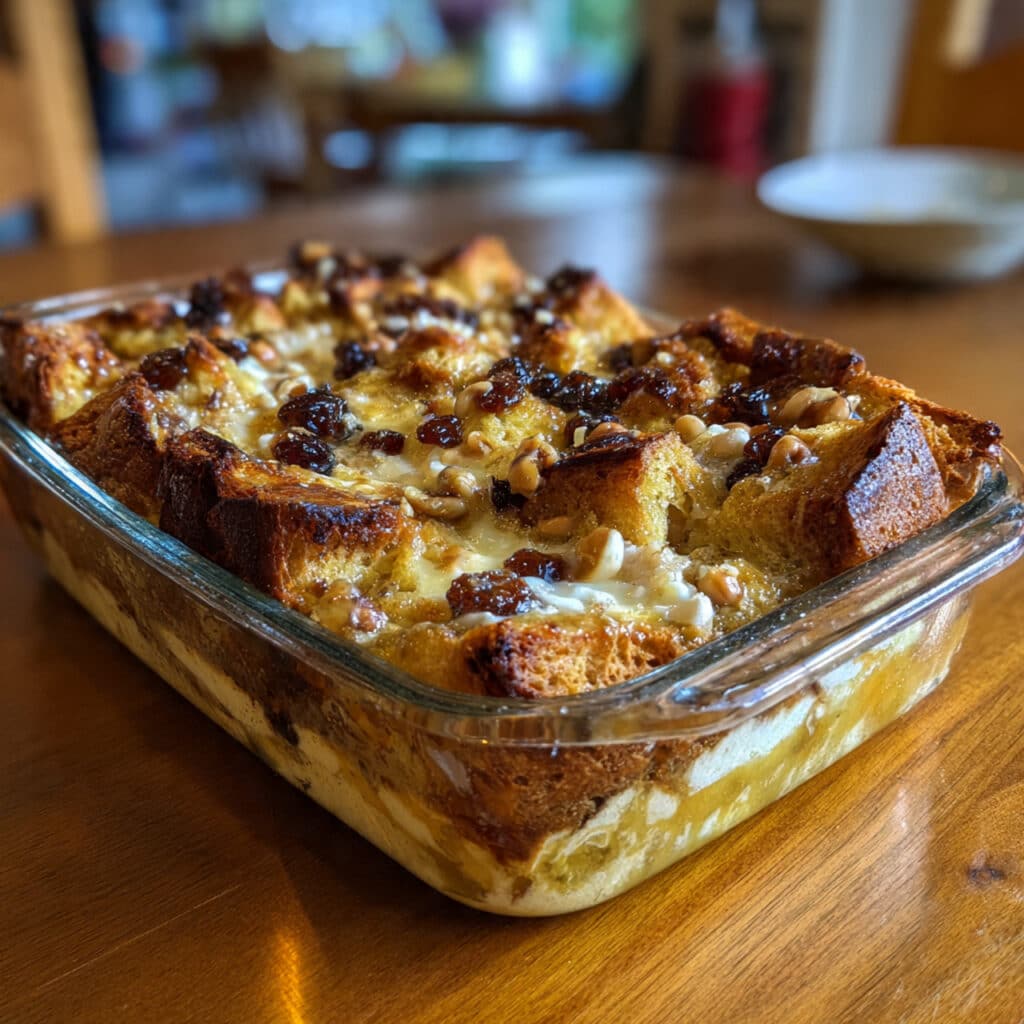
Mexican Capirotada brings together the comforting warmth of bread pudding with the vibrant flavors of traditional Mexican spices and ingredients to create a dessert that’s both familiar and wonderfully unique.
This Lenten specialty transforms simple bread slices into a decadent layered casserole sweetened with piloncillo syrup, studded with nuts and dried fruit, and finished with melted cheese for an unforgettable sweet-and-savory experience. Perfect for Easter celebrations, family gatherings, or any time you want to explore authentic Mexican cuisine.
Why You’ll Love This Recipe
- Rich Cultural Tradition: This authentic Mexican bread pudding has been passed down through generations, especially popular during Lent and Easter celebrations throughout Mexico and the American Southwest.
- Sweet and Savory Magic: The combination of cinnamon-spiced syrup, toasted bread, melted cheese, and dried fruits creates a flavor profile you simply can’t find in regular bread pudding.
- Budget-Friendly Comfort: Originally created to use up stale bread and pantry staples, capirotada delivers maximum flavor and satisfaction without breaking the bank.
- Make-Ahead Convenience: This casserole actually improves as it sits, making it perfect for busy holiday schedules when you need to prep ahead.
- Crowd-Pleasing Appeal: The layers of texture—crunchy nuts, chewy raisins, soft bread, and gooey cheese—mean there’s something for everyone in every bite.
Equipment Needed
- 9×13-inch baking dish
- Large saucepan or pot
- Baking sheet (for toasting bread)
- Sharp knife and cutting board
- Measuring cups and spoons
- Wooden spoon for stirring syrup
- Aluminum foil
- Oven mitts
Mexican Capirotada
- Total Time: 100 minutes
- Diet: Vegetarian
Description
Mexican Capirotada is a traditional Lenten bread pudding layered with toasted bread, piloncillo syrup, cheese, nuts, and dried fruits. This sweet and savory dessert combines cinnamon-spiced flavors with unique textures for an authentic taste of Mexican heritage perfect for Easter and spring celebrations.
Ingredients
For the Bread Base:
1 large loaf bolillo bread or French bread (12–16 oz), sliced ½-inch thick
4 tablespoons butter for toasting
For the Piloncillo Syrup:
2 cones piloncillo (14 oz total), chopped (or 1½ cups dark brown sugar)
4 cups water
2 cinnamon sticks
3 whole cloves
1 star anise (optional)
For the Layers:
1 cup raisins
1 cup chopped pecans or walnuts, toasted
1 cup peanuts (roasted and salted)
1 cup shredded Monterey Jack or mild white cheddar cheese
½ cup chopped dates or prunes (optional)
¼ cup dried cranberries (optional)
Optional Toppings:
Whipped cream or vanilla ice cream
Extra toasted nuts
Fresh cinnamon stick for garnish
Instructions
1. Preheat oven to 350°F. Arrange bread slices on a baking sheet and brush both sides with melted butter. Toast for 8-10 minutes, flipping halfway, until lightly golden and crispy. Set aside.
2. Combine chopped piloncillo (or dark brown sugar), water, cinnamon sticks, cloves, and star anise in a large saucepan. Bring to a boil, stirring frequently to dissolve the piloncillo. Reduce heat and simmer for 15-20 minutes until syrup thickens slightly. Strain out whole spices and set aside.
3. While syrup simmers, toast nuts in a dry skillet over medium heat for 3-4 minutes until fragrant. Set aside to cool. Measure out raisins, dried fruits, and shredded cheese.
4. Grease a 9×13-inch baking dish with butter. Place one layer of toasted bread on the bottom, tearing pieces to fill gaps. Sprinkle with one-third of the raisins, nuts, peanuts, and cheese. Drizzle with one-third of the warm piloncillo syrup. Repeat layering two more times, ending with syrup, cheese, and nuts on top.
5. Press down gently on the top layer with a spatula. Let the casserole sit at room temperature for 15-20 minutes to allow bread to soak up the syrup.
6. Cover baking dish tightly with aluminum foil and bake at 350°F for 30 minutes. Remove foil and bake 15-20 minutes more until the top is golden brown and cheese is melted and bubbly. Let cool 10 minutes before serving.
Notes
Day-old or slightly stale bread works better than fresh – it soaks up syrup without falling apart.
Toast the bread to create a barrier that prevents complete sogginess while allowing flavor absorption.
Piloncillo delivers deep molasses notes that define authentic capirotada. Find it in Hispanic foods sections.
The cheese isn’t a mistake – it’s traditional and adds creamy richness. Don’t skip it!
Remove whole spices from syrup before pouring over bread to avoid biting into them.
Toast all nuts beforehand for intensified flavor – this small step makes a huge difference.
Use warm syrup when assembling – cold syrup won’t soak into bread as effectively.
Store leftovers covered in the refrigerator for up to 4 days. Reheat portions in microwave for 30-60 seconds.
- Prep Time: 30 minutes
- Cook Time: 50 minutes
- Category: Dessert
- Method: Baked
- Cuisine: Mexican
Nutrition
- Serving Size: 1/12 of casserole
- Calories: 385
- Sugar: 32g
- Sodium: 245mg
- Fat: 16g
- Saturated Fat: 5g
- Unsaturated Fat: 10
- Trans Fat: 0g
- Carbohydrates: 54g
- Fiber: 3g
- Protein: 9g
- Cholesterol: 18mg
Ingredients You’ll Need
For the Bread Base:
- 1 large loaf bolillo bread or French bread (about 12-16 oz), sliced into ½-inch thick pieces
- 4 tablespoons butter for toasting (or use cooking spray)
For the Piloncillo Syrup:
- 2 cones piloncillo (about 14 oz total), chopped into small pieces (or substitute 1½ cups dark brown sugar)
- 4 cups water
- 2 cinnamon sticks
- 3 whole cloves
- 1 star anise (optional, for deeper spice notes)
For the Layers:
- 1 cup raisins
- 1 cup chopped pecans or walnuts, toasted
- 1 cup peanuts (roasted and salted)
- 1 cup shredded Monterey Jack or mild white cheddar cheese
- ½ cup chopped dates or prunes (optional)
- ¼ cup dried cranberries (optional, for tartness)
Optional Toppings:
- Whipped cream or vanilla ice cream
- Extra toasted nuts
- Fresh cinnamon stick for garnish
Ingredient Notes
Piloncillo: This unrefined Mexican sugar comes in hard cones and delivers deep molasses and caramel notes that define authentic capirotada. Find it in the Hispanic foods section of most grocery stores or Latin markets. Dark brown sugar works as a substitute but won’t provide quite the same complex flavor. Chop piloncillo into small pieces to help it dissolve faster.
Bread Selection: Traditional bolillo rolls (Mexican French-style bread) are ideal because they have a sturdy crumb that soaks up syrup without falling apart. Day-old or slightly stale bread actually works better than fresh. French bread, sourdough, or even challah make excellent alternatives. Cut into thick slices so they maintain texture.
The Cheese Debate: Yes, cheese in a sweet dish might sound unusual, but it’s absolutely traditional and essential to authentic capirotada. Monterey Jack melts beautifully and adds creamy richness without overwhelming sweetness. Some regions use queso fresco or Chihuahua cheese. Don’t skip it—this sweet-savory combination is what makes capirotada special.
Spices: Cinnamon sticks and whole cloves infuse the syrup with warm, aromatic spice. Don’t substitute ground spices here as they’ll make the syrup cloudy and gritty. Star anise adds beautiful licorice notes if you can find it. Always remove whole spices before pouring the syrup over the bread.
Nuts: Peanuts are traditional in many Mexican households and add wonderful crunch and protein. Pecans or walnuts contribute buttery richness. Toast all nuts beforehand in a dry skillet to intensify their flavor—this small step makes a huge difference.
Dried Fruits: Raisins are the classic choice, but feel free to mix in chopped dates, prunes, dried cranberries, or chopped dried apricots. The fruit plumps up beautifully as it absorbs the spiced syrup, adding pockets of concentrated sweetness throughout.
Step-by-Step Instructions
Step 1: Toast the Bread
Preheat your oven to 350°F. Arrange bread slices in a single layer on a baking sheet and brush both sides lightly with melted butter or spray with cooking spray. Toast in the oven for 8-10 minutes, flipping halfway through, until the bread is lightly golden and crispy but not hard.
Step 2: Make the Piloncillo Syrup
Combine the chopped piloncillo (or dark brown sugar), water, cinnamon sticks, cloves, and star anise in a large saucepan. Bring to a boil over medium-high heat, stirring frequently to help the piloncillo dissolve completely. Once boiling, reduce heat and simmer for 15-20 minutes until the syrup thickens slightly and reduces by about one-third.
Step 3: Prepare Your Layering Ingredients
While the syrup simmers, toast your nuts in a dry skillet over medium heat for 3-4 minutes, stirring frequently, until fragrant and lightly golden. Set aside to cool. Measure out your raisins, other dried fruits, and shredded cheese.
Step 4: Layer the Casserole
Grease your 9×13-inch baking dish generously with butter. Place one layer of toasted bread slices on the bottom, tearing pieces as needed to fill gaps. Sprinkle with about one-third of the raisins, nuts, peanuts, and cheese.
Drizzle with about one-third of the warm piloncillo syrup. Repeat this layering process two more times, ending with a final drizzle of syrup and a generous sprinkle of cheese and nuts on top.
Step 5: Let It Soak
Once assembled, press down gently on the top layer with a spatula to help the bread absorb the syrup. Let the casserole sit at room temperature for 15-20 minutes.
Step 6: Bake to Perfection
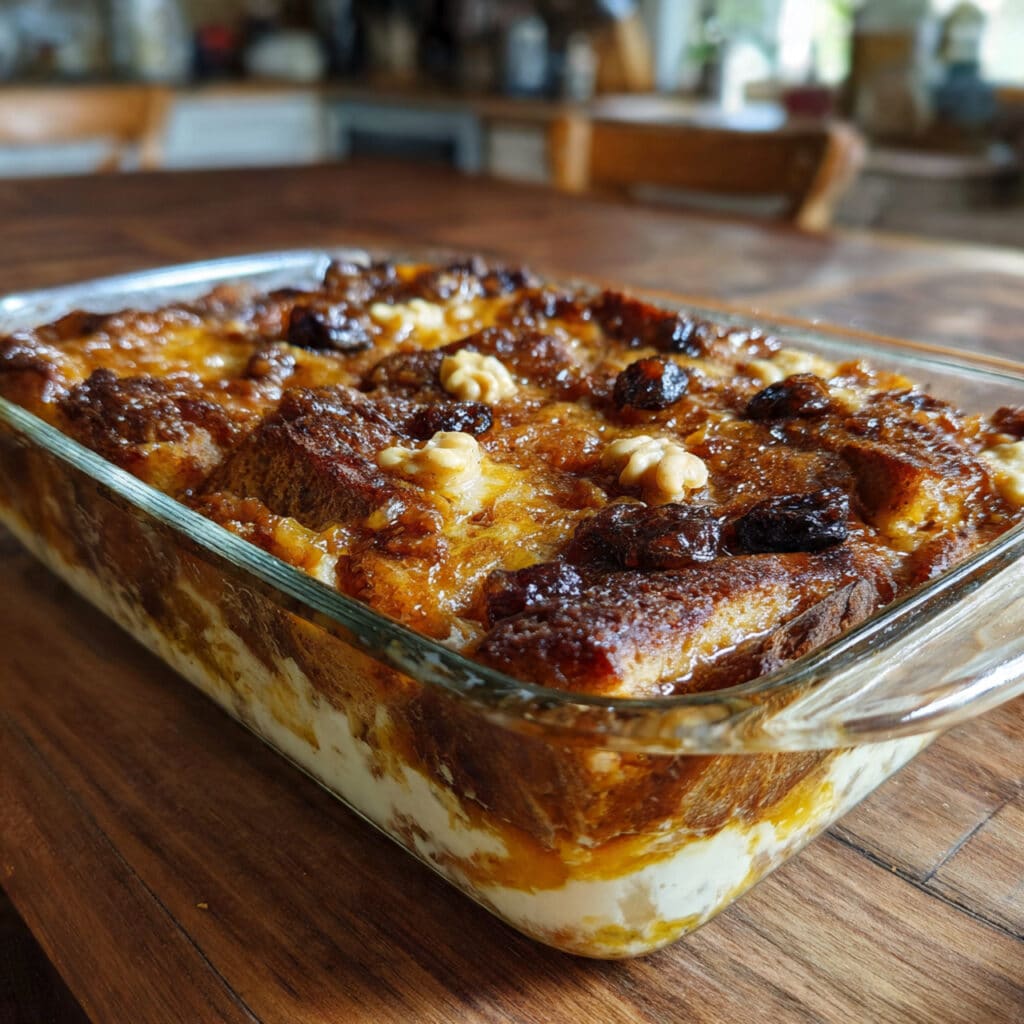
Cover the baking dish tightly with aluminum foil and bake at 350°F for 30 minutes. Remove the foil and continue baking for an additional 15-20 minutes until the top is golden brown and the cheese is melted and bubbly. The edges should look slightly caramelized. Let cool for at least 10 minutes before serving.
Pro Tips & Cooking Hacks
- Day-old bread is your friend: Fresh bread gets too soggy. Stale or day-old bread maintains better texture and absorbs syrup more evenly.
- Don’t skip toasting: Toasting the bread creates a barrier that prevents complete sogginess while still allowing flavor absorption.
- Make syrup ahead: The piloncillo syrup can be made 2-3 days in advance and stored in the refrigerator. Gently reheat before using.
- Customize your layers: Some families add sliced bananas, coconut flakes, or even chocolate chips. Feel free to make it your own.
- Temperature matters: Use warm syrup when assembling. Cold syrup won’t soak into the bread as effectively.
- Serve it warm: Capirotada is best enjoyed warm with the cheese still gooey. Reheat individual portions in the microwave for 30-45 seconds.
- Press gently: After layering, press down lightly to compact the layers and help syrup distribution without crushing the bread.
Tips & Variations
Vegan Capirotada: Skip the cheese and butter, using olive oil to toast the bread instead. The dish will be slightly less rich but still delicious. Some vegan cooks add a sprinkle of nutritional yeast for savory depth. Coconut milk can be added to the syrup for extra richness.
Extra Decadent Version: Layer in sliced bananas, chocolate chips, or dulce de leche between the bread layers. Some cooks drizzle sweetened condensed milk over the top before baking for ultra-richness. A splash of rum or brandy in the syrup adds sophisticated depth.
Individual Servings: Assemble in individual ramekins or mason jars for personal-sized portions. Reduce baking time to 20-25 minutes total. These make beautiful presentations for dinner parties and allow guests to customize their toppings.
Gluten-Free Option: Use gluten-free bread, though results will vary by brand. Denser gluten-free breads work better than light, airy versions. You may need to reduce the amount of syrup slightly as some gluten-free breads don’t absorb as much liquid.
Regional Variations: Different regions of Mexico have their own twists—some add fresh tomatoes (yes, really!), others include sweet potatoes or plantains. Colima-style capirotada uses milk in the syrup, while Sinaloa versions often include pineapple.
Serving Suggestions
Traditional Service: Serve warm in bowls with a scoop of vanilla ice cream or a dollop of whipped cream. The cold cream melting into the warm, spiced capirotada creates incredible textural and temperature contrast. A light dusting of cinnamon on top adds visual appeal and extra warmth.
Breakfast or Brunch Treat: Capirotada makes a wonderful breakfast during holiday weekends. Pair with hot Mexican chocolate or café de olla (cinnamon-spiced coffee). Add a side of fresh fruit for balance. Leftovers reheat beautifully for an indulgent start to your day.
Dessert Course: Present individual portions in pretty bowls with a cinnamon stick garnish and fresh berries on the side. A drizzle of cajeta (Mexican caramel made from goat’s milk) takes it over the top. Serve alongside strong coffee or a sweet dessert wine.
Potluck Winner: Transport capirotada in the baking dish, still warm, covered with foil. Bring ice cream or whipped cream in a cooler for serving. This dish travels well and stays warm for surprisingly long, making it ideal for church suppers and family gatherings.
Common Mistakes
- Using fresh, soft bread: Fresh bread turns to mush. Always use day-old or toasted bread for the best texture.
- Skipping the cheese: It sounds odd but it’s essential to authentic flavor. The sweet-savory combination is what makes capirotada special.
- Over-soaking: Too much syrup creates soup rather than bread pudding. The bread should be moist but not swimming in liquid.
- Not toasting nuts: Raw nuts lack the depth of flavor that toasted nuts provide. This small step makes a huge difference.
- Cutting syrup simmer time short: The syrup needs time to develop deep caramel notes and thicken properly for the right consistency.
- Serving too hot: Right out of the oven, capirotada is molten. Let it rest 10-15 minutes so it sets up and won’t burn mouths.
What to Serve With Mexican Capirotada
Easter and Lenten Meals: Capirotada traditionally follows meatless meals during Lent. Serve after dishes like fish tacos, shrimp enchiladas, cheese quesadillas, or vegetable tamales. A simple green salad with lime vinaigrette provides refreshing contrast before this rich dessert.
Mexican Fiesta Spread: Include capirotada on a dessert table alongside tres leches cake, flan, churros, and Mexican wedding cookies. Offer both hot chocolate and horchata as beverage options. This creates a beautiful display of traditional Mexican sweets.
Coffee and Dessert Service: Host a late-afternoon gathering featuring capirotada with café de olla, Mexican hot chocolate, or champurrado (masa-based hot chocolate). Add some Mexican sweet breads (pan dulce) and fresh fruit for a relaxed, social dessert service.
Casual Weekend Brunch: Serve alongside huevos rancheros, chilaquiles, fresh fruit, and churros. The sweet capirotada balances savory egg dishes beautifully. Add mimosas or fresh-squeezed orange juice to round out the brunch spread.
Frequently Asked Questions
What does capirotada mean?
Capirotada comes from the Spanish word “capirotada,” referring to a mixture of various ingredients. The dish dates back to medieval Spain and evolved differently in Mexico, where it became associated with Lent and Easter traditions. The ingredients symbolize elements of the Crucifixion.
Can I make capirotada without piloncillo?
Yes, dark brown sugar makes an acceptable substitute, though the flavor won’t be quite as complex. Use 1½ cups dark brown sugar for every two cones of piloncillo. Some cooks mix dark brown sugar with a tablespoon of molasses to get closer to piloncillo’s depth.
How do I store leftover capirotada?
Cover tightly with plastic wrap or transfer to an airtight container and refrigerate for up to 4 days. Reheat individual portions in the microwave for 30-60 seconds until warmed through. The texture may soften further but the flavor remains delicious.
Why is there cheese in a sweet dish?
The sweet-savory combination is traditional in Mexican cuisine and provides wonderful contrast. The mild cheese melts into creamy pockets throughout the dish without making it taste “cheesy.” Think of it like cream cheese in cheesecake—it adds richness without overwhelming sweetness.
Can I freeze capirotada?
Freezing isn’t ideal as the texture changes significantly upon thawing, becoming mushier. If you must freeze, wrap portions tightly in plastic wrap then foil and freeze up to 2 months. Thaw in the refrigerator overnight and reheat gently.
💬 Tried this recipe? Leave a comment and rating below!