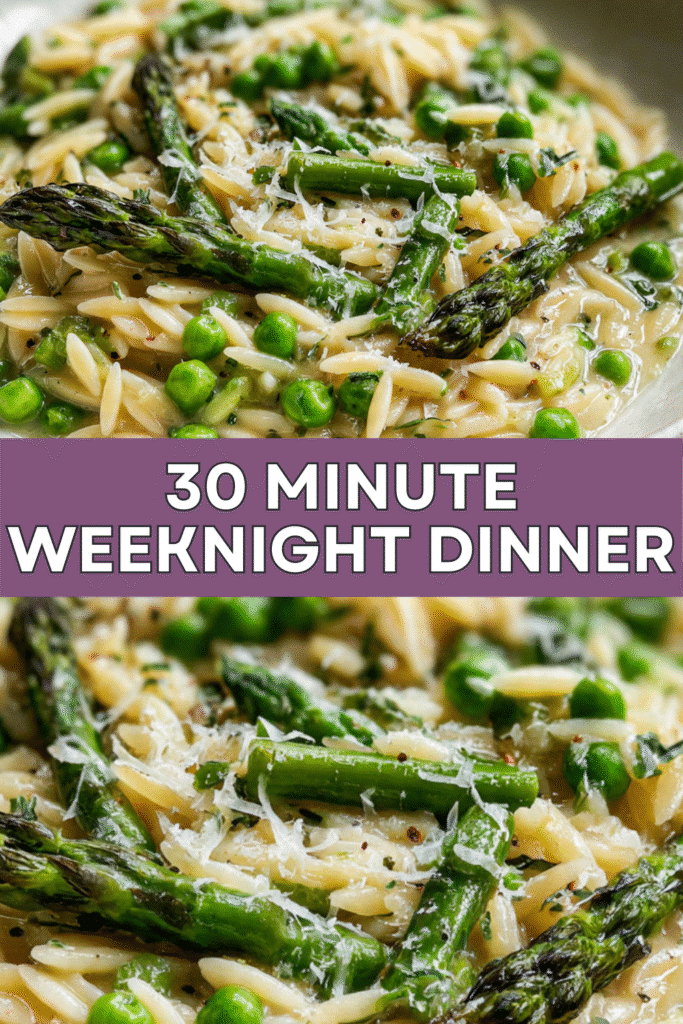
Orzo with Asparagus and Peas is everything a weeknight pasta should be. Creamy, loaded with spring vegetables, finished with lemon and Parmesan, and done from start to finish in 30 minutes with a single pot. It works as a complete vegetarian main, a side dish for grilled chicken or shrimp, and a crowd-pleaser for anyone who thinks they do not like asparagus.
Why You’ll Love This Recipe
- Truly one pot, one cleanup — everything from sautéing aromatics to simmering the orzo happens in the same skillet or pot.
- Creamy without being heavy — the starchy orzo and Parmesan create a velvety sauce naturally, no heavy cream required.
- Ready in 30 minutes — faster than ordering delivery and far more satisfying than anything that comes in a box.
- Packed with vegetables — asparagus, peas, and onion pack real nutrition into every bowl.
- Endlessly adaptable — swap the vegetables, change the cheese, or add protein to make it work with whatever is in the refrigerator tonight.
Equipment Needed
- Large, deep skillet or wide saucepan (at least 3-quart capacity)
- Wooden spoon or heat-safe spatula
- Sharp knife and cutting board
- Box grater or Microplane (for Parmesan)
- Liquid measuring cup
One Pot Orzo with Asparagus and Peas
- Total Time: 30 minutes
- Yield: 4 servings 1x
- Diet: Vegetarian
Description
One Pot Orzo with Asparagus and Peas is a creamy, spring-forward pasta that comes together in 30 minutes using a single pan. Orzo toasts in olive oil until nutty, then simmers risotto-style in warm vegetable stock until the liquid absorbs into a silky, starchy sauce. Parmesan, lemon, and fresh herbs finish the dish and make it taste far more involved than it actually is.
Ingredients
- 2 tbsp olive oil
- 1 small yellow onion, finely diced
- 3 cloves garlic, minced
- 1½ cups dry orzo pasta
- 3½ cups vegetable stock, warm
- 1 lb asparagus, cut into 1-inch pieces (tips kept whole and added last)
- 1 cup frozen peas
- ½ cup freshly grated Parmesan cheese
- 1 tbsp fresh lemon juice
- 1 tsp lemon zest
- ½ tsp kosher salt, plus more to taste
- ¼ tsp black pepper
- 2 tbsp fresh parsley or basil, chopped, for garnish
Instructions
1. Heat olive oil in a wide, deep skillet or sauté pan over medium heat. Add the diced onion and cook for 3–4 minutes, stirring occasionally, until softened and translucent. Add the garlic and cook for 1 more minute until fragrant.
2. Add the asparagus pieces (not the tips) to the pan and sauté for 2–3 minutes until they turn bright green. Push everything to the sides to create space in the center of the pan.
3. Add the dry orzo to the center of the pan and toast for 1–2 minutes, stirring constantly, until the pasta turns lightly golden. Toasting adds nuttiness and helps the orzo hold its shape during simmering.
4. Pour in the warm vegetable stock and stir everything together. Bring to a gentle boil, then reduce heat to medium-low. Simmer uncovered for 10–12 minutes, stirring every 2 minutes, until the orzo absorbs most of the liquid and turns creamy.
5. Stir in the frozen peas, asparagus tips, lemon juice, and lemon zest. Cook for 2 more minutes until the peas are bright green and the asparagus tips are just tender. Remove from heat, stir in Parmesan, and season with salt and pepper. Serve immediately garnished with fresh parsley or basil.
Notes
Use warm or room-temperature vegetable stock — cold stock added to the hot pan slows cooking and causes starchy clumping.
Stir every couple of minutes during the simmer to prevent sticking and build the creamy, risotto-like consistency.
Add frozen peas and asparagus tips in the final 2 minutes only — they cook fast and lose their bright color if added too early.
For a vegan version, skip the Parmesan and stir in 3 tbsp nutritional yeast plus 1 extra tsp lemon juice.
Add a can of drained chickpeas or top with sliced grilled chicken for extra protein.
Leftovers thicken considerably in the refrigerator — add a splash of stock or water when reheating and stir over medium-low heat to loosen.
- Prep Time: 8 minutes
- Cook Time: 22 minutes
- Category: Pasta & One Pot
- Method: Stovetop
- Cuisine: Mediterranean-American
Nutrition
- Serving Size: ¼ of recipe (approx. 1¼ cups)
- Calories: 390
- Sugar: 6g
- Sodium: 580mg
- Fat: 11g
- Saturated Fat: 3g
- Unsaturated Fat: 7g
- Trans Fat: 0g
- Carbohydrates: 58g
- Fiber: 6g
- Protein: 15g
- Cholesterol: 8mg
Ingredients You’ll Need
- 2 tbsp unsalted butter
- 1 medium red onion, diced
- 2 garlic cloves, sliced
- ¾ lb (about 12 oz) fresh asparagus, trimmed and cut into bite-size pieces
- 1½ cups orzo pasta (about 8 oz)
- 1 cup frozen or fresh peas
- 3½ cups vegetable stock
- ¼ tsp kosher salt
- ¼ tsp ground black pepper
- Juice and zest of ½ lemon
- ⅓ cup freshly grated Parmesan cheese, plus more for serving
Ingredient Notes
Orzo: Orzo (also called risoni) is a small rice-shaped pasta that behaves like risotto when simmered in stock — it absorbs the liquid and releases starch that creates a naturally creamy, cohesive sauce. Regular small pasta like ditalini or acini di pepe works as a substitute, though the texture will be slightly different. Check the orzo for doneness 1–2 minutes before the package’s recommended cook time to avoid mushiness.
Asparagus: Cut the trimmed spears into 1-inch bite-size pieces so they distribute evenly throughout the orzo. Very thin asparagus needs only 1–2 minutes of cooking before the orzo goes in; medium or thick spears can handle the full 2–3 minutes called for here. The goal is asparagus that retains a slight bite in the finished dish rather than going limp in the sauce.
Vegetable stock: The stock is where most of the flavor comes from in this dish — use a good-quality stock, whether store-bought or homemade. Low-sodium stock gives you better control over the final salt level since Parmesan adds saltiness at the end. Chicken stock works equally well if you are not keeping the dish vegetarian.
Parmesan: Freshly grated Parmesan from a block melts smoothly into the sauce and gives the dish that glossy, restaurant-quality finish. Pre-shredded Parmesan often contains anti-caking starch that can make the sauce grainy. Grate generously — this is not the place to be conservative with the cheese.
Step-by-Step Instructions
Step 1: Sauté the Aromatics
Melt the butter in a large, deep skillet over medium heat. Add the diced red onion and cook, stirring occasionally, for 2–3 minutes until the onion softens and turns translucent. Add the sliced garlic and cook for another minute until fragrant. The butter-onion-garlic base builds the savory foundation that the rest of the dish layers on top of.
Step 2: Cook the Asparagus
Add the asparagus pieces to the pan and cook, stirring occasionally, for 2–3 minutes. The asparagus softens slightly and picks up the butter and garlic flavors during this time. It will continue cooking when the stock goes in, so avoid cooking it fully at this stage — you want it to finish just tender, not mushy, in the final dish.
Step 3: Toast the Orzo and Add Stock
Stir in the dry orzo and let it toast in the butter for about 1 minute, stirring constantly — this brief toasting step adds a subtle nutty depth to the finished dish. Add the peas and pour in all the vegetable stock. Stir everything together and bring the mixture to a boil over medium-high heat.
Step 4: Simmer Until Creamy
Reduce the heat to a gentle simmer and cook for about 10 minutes, stirring every couple of minutes to prevent the orzo from sticking to the bottom of the pot. The orzo is done when it is al dente — tender but with just a slight bite in the center. Most of the stock will be absorbed by this point, and the remaining liquid will look creamy and slightly thickened from the released starch.
Step 5: Season and Finish with Parmesan
Remove the pan from the heat and stir in the salt, black pepper, and lemon juice and zest. Add the Parmesan and stir until the cheese melts completely into the sauce. Taste and adjust the seasoning — the dish may need a touch more salt, especially if your stock was low-sodium. Serve immediately with extra Parmesan grated over the top of each bowl.
Pro Tips & Cooking Hacks
- Do not skip the toasting step for the orzo — it only takes a minute and adds a noticeable depth of flavor to the finished dish.
- Stir every 2–3 minutes while simmering to prevent the orzo from sticking to the pan and developing a burned layer on the bottom.
- Check the orzo 1–2 minutes early — it can go from al dente to mushy quickly once it absorbs all the liquid.
- If the orzo absorbs all the stock before it is fully cooked, add a splash of warm water or stock and continue simmering.
- Stir in a tablespoon of fresh herbs (basil, parsley, or dill) right before serving for extra brightness and color.
Tips & Variations
Add protein: Stir in leftover rotisserie chicken, cooked shrimp, or sautéed Italian sausage during the last 2 minutes of cooking. The orzo already acts as a complete dish on its own, but adding protein makes it a more substantial weeknight dinner that satisfies bigger appetites.
Different cheese options: Swap the Parmesan for crumbled feta for a tangier, saltier finish that pairs especially well with the peas and lemon. Dollops of creamy ricotta stirred in at the end add richness and a lighter, more delicate dairy flavor. Both variations work beautifully with the spring vegetable combination.
Vegetable swaps: Baby spinach wilts beautifully into this dish — stir in 2 cups during the last minute of cooking. Diced bell peppers, sliced mushrooms, or small broccoli florets can replace or supplement the asparagus with minimal adjustments to cook time.
Serving Suggestions
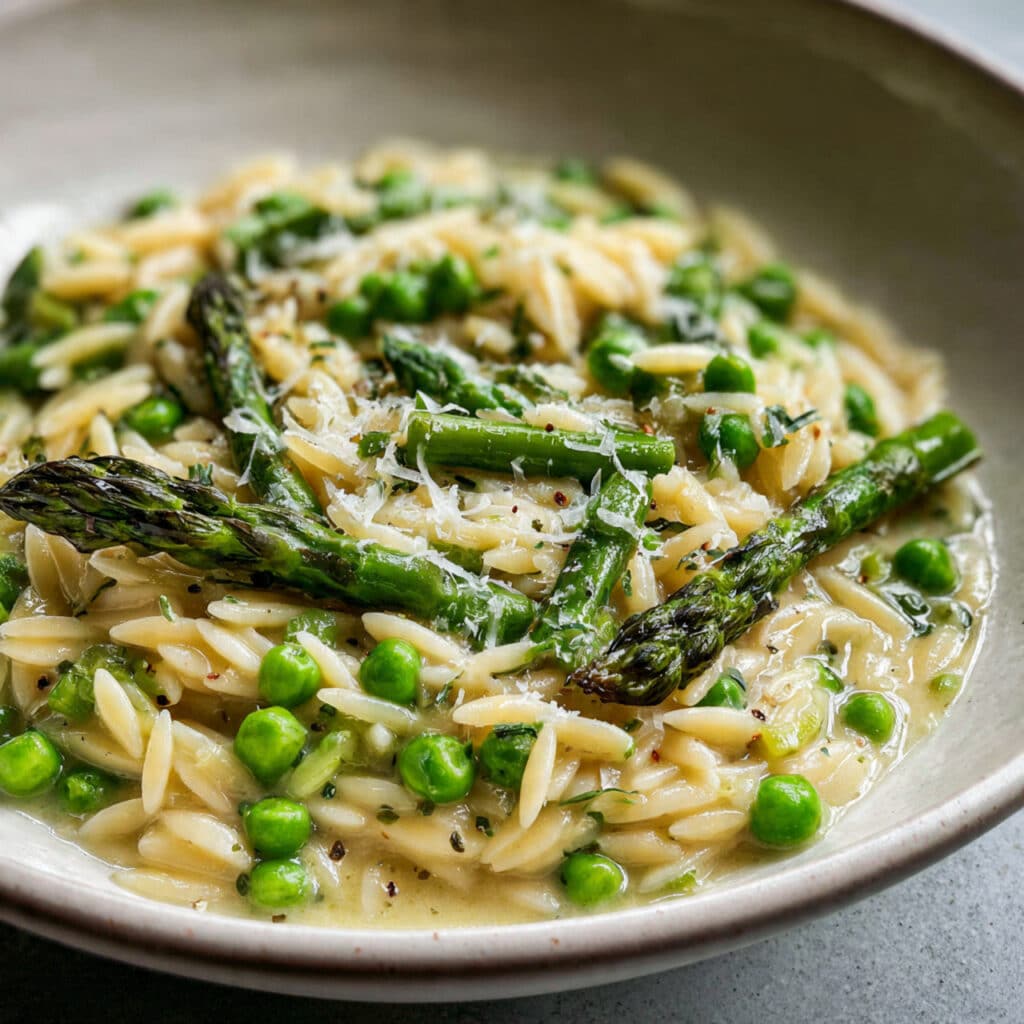
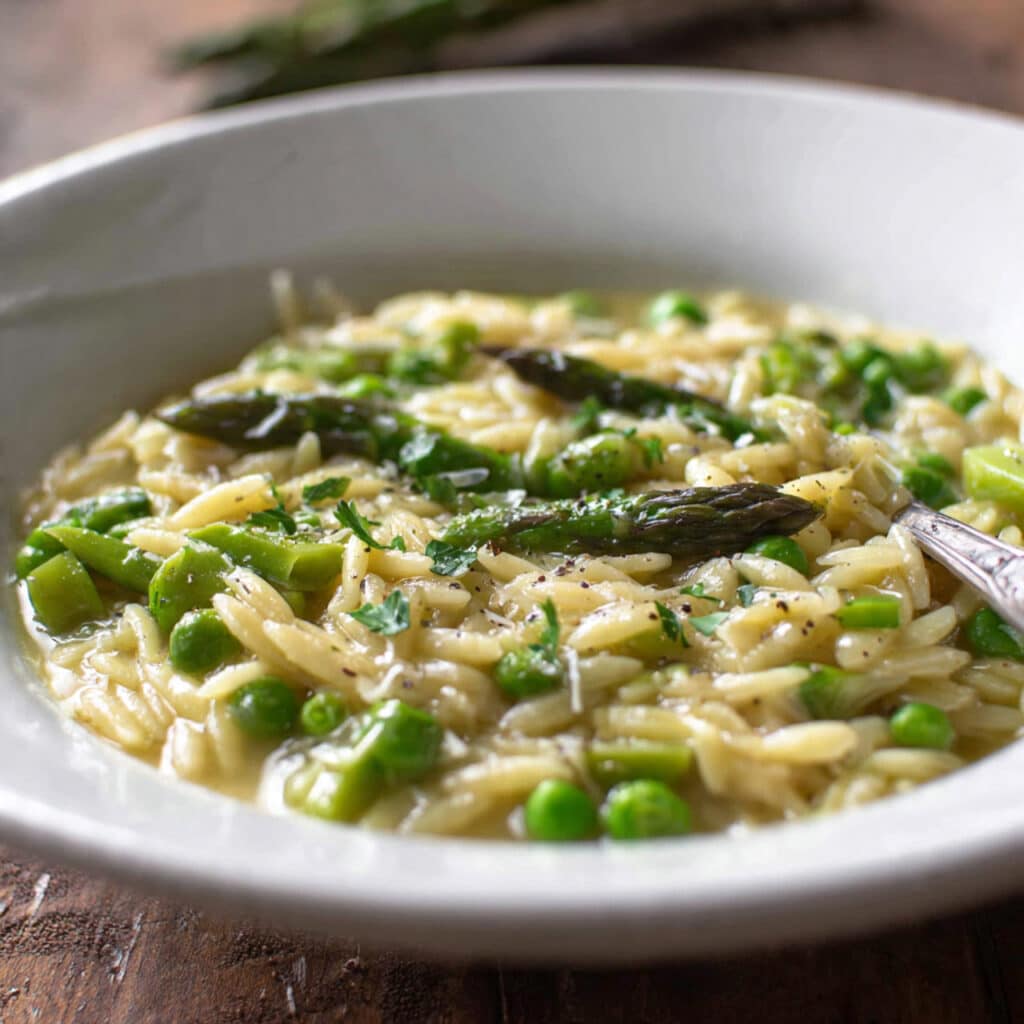
Serve this orzo primavera as the main event in wide, shallow pasta bowls with an extra shower of Parmesan and a wedge of lemon on the side. A simple green salad dressed with lemon vinaigrette echoes the citrus in the orzo and keeps the meal feeling light and spring-appropriate. A piece of crusty bread on the side is perfect for scooping up any sauce left in the bowl.
As a side dish, this orzo pairs well with grilled or pan-seared chicken breasts, sautéed shrimp, or baked salmon. The creamy, vegetable-packed orzo acts as both starch and vegetable in one, simplifying the meal planning considerably. For a casual family dinner, set the pan in the center of the table and let everyone serve themselves straight from the pot.
Common Mistakes
- Using pre-shredded Parmesan: Anti-caking starch makes the sauce grainy instead of silky. Always grate from a block.
- Not stirring during simmering: Orzo sticks aggressively to the bottom of the pot if left undisturbed. Stir every 2–3 minutes throughout the simmer.
- Overcooking the orzo: Check it before the package time suggests — al dente orzo makes a creamy dish; overcooked orzo makes a gluey one.
- Adding all the Parmesan while still on high heat: Remove the pan from the heat or reduce to low before stirring in the cheese to prevent the sauce from becoming stringy or clumping.
- Skipping the lemon: The acid is not optional — it brightens the whole dish and balances the richness of the butter and Parmesan. Even half a lemon makes a big difference.
What to Serve With One Pot Orzo with Asparagus and Peas
This dish is rich enough to stand alone as a vegetarian main for two to three people. A simple side salad with a light, acidic dressing is all it needs — arugula with lemon vinaigrette and shaved Parmesan mirrors the flavors already in the bowl and keeps the meal cohesive without adding complexity.
For a more complete dinner, pair it with grilled chicken thighs seasoned with lemon and garlic. The orzo acts as both the starch and vegetable component of the meal, eliminating the need for additional sides and keeping the whole dinner on the table in under 30 minutes.
Frequently Asked Questions
Can I make this dish ahead of time?
This dish is best served immediately — orzo continues absorbing liquid as it sits and thickens into a stiff, pasta-heavy dish rather than a saucy one. If you need to make it ahead, slightly undercook the orzo, refrigerate, and reheat on the stovetop with a splash of broth or water to loosen the sauce.
Can I use chicken stock instead of vegetable stock?
Yes — chicken stock adds a slightly richer, more savory base flavor and works well here if you are not keeping the dish vegetarian. Low-sodium chicken stock gives you the best control over the final salt level.
Can I use a different pasta shape?
Small pasta shapes like ditalini, acini di pepe, or stelline work as substitutes. The saucy, risotto-like consistency is specific to orzo’s starch content, so larger pasta shapes will produce a different (though still delicious) result.
How do I store and reheat leftovers?
Refrigerate in an airtight container for up to 3–4 days. Reheat gently in a skillet over medium-low heat with a splash of broth or water, stirring until the sauce loosens and the orzo is heated through. Individual portions reheat well in the microwave with a tablespoon of water stirred in before heating.
💬 Tried this recipe? Leave a comment and rating below!