Rhubarb Sour Belts bring nostalgic candy shop flavors into your home kitchen with wholesome ingredients. These chewy, tangy strips capture the bright tartness of fresh rhubarb without artificial colors or flavors. Perfect for lunchboxes, road trips, or movie nights, these homemade sour belts satisfy your sweet tooth while showcasing seasonal produce in a fun, kid-friendly way.
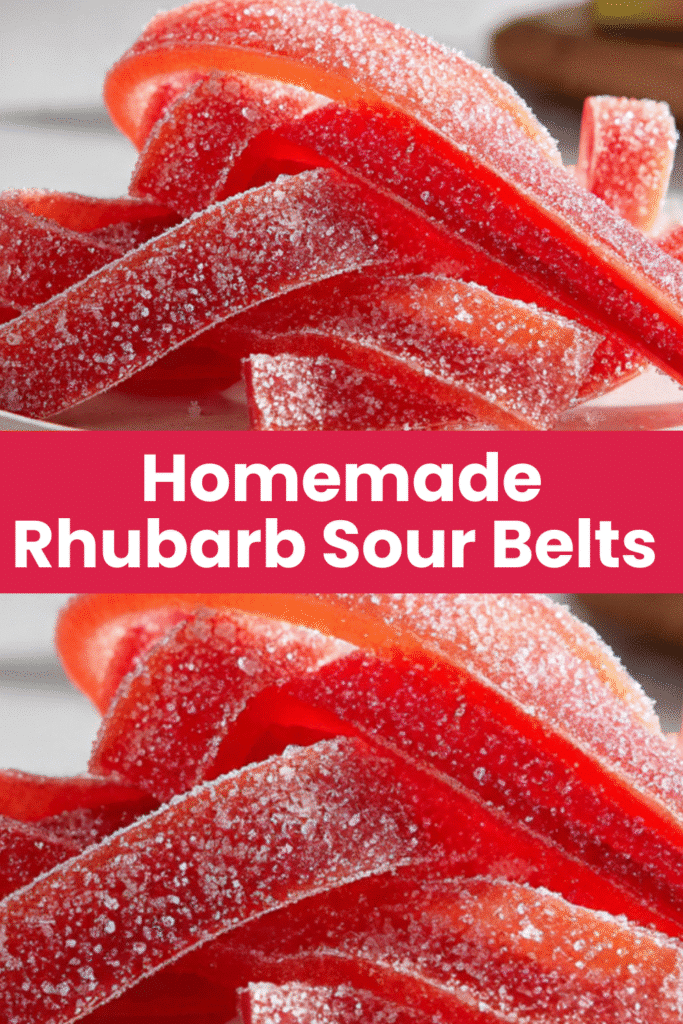
Why You’ll Love This Recipe
- Natural ingredients with no artificial dyes or preservatives
- Fun project for kids and adults alike
- Uses seasonal rhubarb in a creative, unexpected way
- Customizable sweetness and sourness levels
- Healthier alternative to store-bought candy
Equipment Needed
- Medium saucepan
- Blender or immersion blender
- Fine mesh sieve
- Baking sheet
- Parchment paper or silicone mat
- Kitchen scissors or pizza cutter
Rhubarb Sour Belts
- Total Time: 7 hours
- Yield: 30 strips 1x
Description
Rhubarb Sour Belts bring nostalgic candy shop flavors into your home kitchen with wholesome ingredients. These chewy, tangy strips capture the bright tartness of fresh rhubarb without artificial colors or flavors.
Ingredients
- 1 lb fresh rhubarb, chopped
- 1/4 cup water
- 1/2 cup granulated sugar, adjust to taste
- 1 tablespoon lemon juice
- Optional: 1 tablespoon honey or maple syrup
- 2 tablespoons cornstarch, optional for thickening
- 1 tablespoon superfine sugar plus 1 teaspoon citric acid for coating
Instructions
1. Combine chopped rhubarb and water in a medium saucepan. Simmer over medium heat until the rhubarb softens and breaks down completely, about 10-12 minutes. Stir occasionally to prevent sticking.
2. Remove from heat and let cool slightly. Transfer to a blender or use an immersion blender to purée until completely smooth. Strain through a fine mesh sieve for extra smoothness if desired.
3. Return the purée to the saucepan. Stir in sugar, lemon juice, and optional honey. Simmer over low heat until the mixture thickens, about 10 more minutes, stirring often to prevent burning.
4. For faster thickening, mix cornstarch with 2 tablespoons water to make a slurry. Stir into the simmering rhubarb mixture and cook, stirring constantly, until noticeably thickened.
5. Line a baking sheet with parchment paper or a silicone mat. Pour the thickened mixture onto the sheet and spread evenly to about 1/8 inch thickness. Work quickly before it starts to set.
6. Dehydrate in the oven at the lowest temperature setting, around 150-170°F. This takes 6-8 hours. The belts are ready when dry and tacky but still pliable, not brittle.
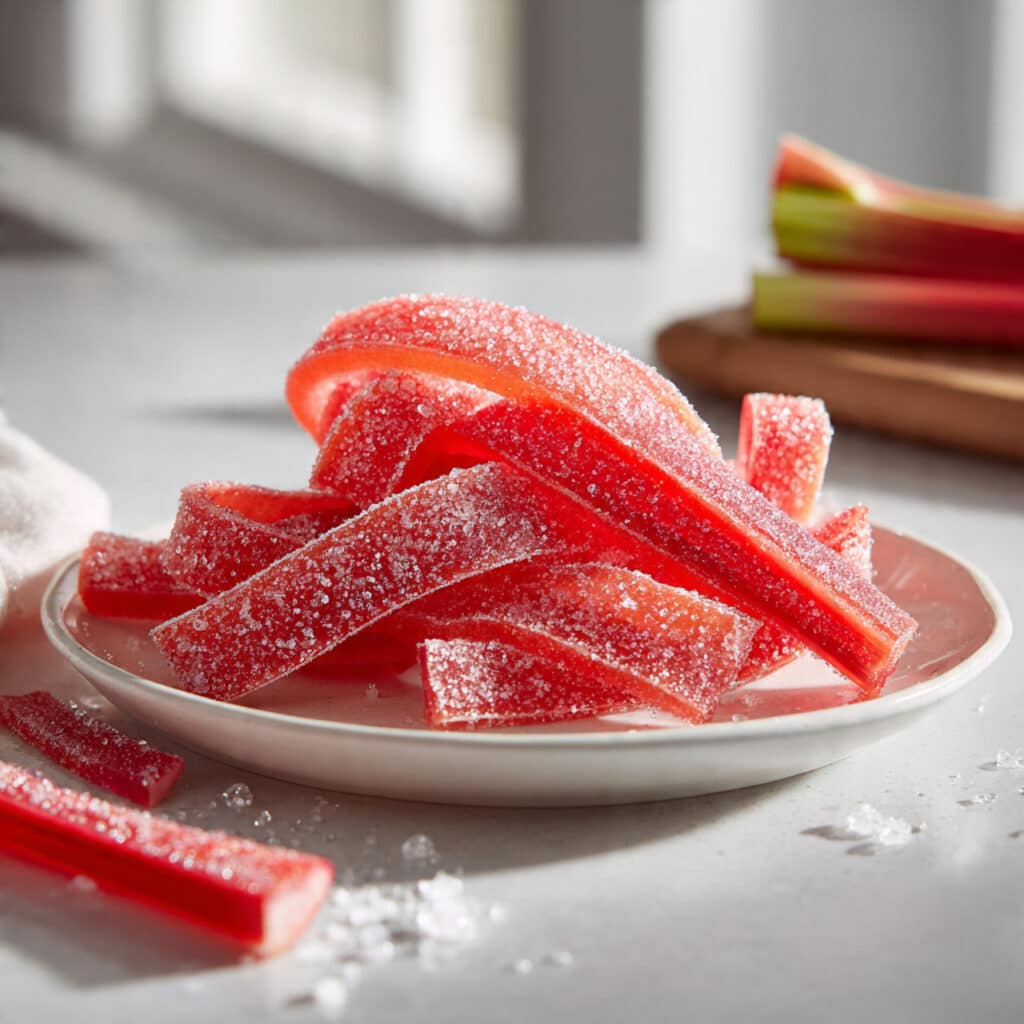
7. Remove from the oven and let cool completely. Use kitchen scissors or a pizza cutter to slice into long belts. Toss in a mixture of superfine sugar and citric acid for the sour coating.
Notes
Spread the mixture as evenly as possible for uniform drying.
Check every hour during drying to prevent over-dehydration.
Use a silicone mat for easiest removal after drying.
Adjust citric acid amount to control sourness level.
Choose bright red or pink rhubarb stalks for the prettiest color.
Add a pinch of ginger or cinnamon to the purée for warming spice notes.
Mix rhubarb with strawberries or raspberries for a sweeter, more complex flavor.
Cut the belts into fun shapes using cookie cutters before they dry completely.
Store in an airtight container in a cool, dry place for up to one week.
- Prep Time: 10 minutes
- Cook Time: 20
- Category: Snacks
- Method: Dehydrating
- Cuisine: American
Nutrition
- Serving Size: 1 strip
- Calories: 35
- Sugar: 8g
- Sodium: 2mg
- Fat: 0g
- Saturated Fat: 0g
- Unsaturated Fat: 0g
- Trans Fat: 0g
- Carbohydrates: 9g
- Fiber: 1g
- Protein: 0g
- Cholesterol: 0mg
Ingredients You’ll Need
- 1 lb fresh rhubarb, chopped
- ¼ cup water
- ½ cup granulated sugar, adjust to taste
- 1 tablespoon lemon juice
- Optional: 1 tablespoon honey or maple syrup
- 2 tablespoons cornstarch, optional for thickening
- 1 tablespoon superfine sugar plus 1 teaspoon citric acid for coating
Ingredient Notes
Choose bright red or pink rhubarb stalks for the prettiest color. The redder the rhubarb, the more vibrant your sour belts will be. Avoid green stalks, which look less appealing and taste less sweet.
Lemon juice enhances the natural tartness and helps preserve the color. Fresh lemon works best, but bottled lemon juice is fine in a pinch. Citric acid creates that authentic sour candy pucker.
Cornstarch is optional but helps the mixture thicken faster during cooking. If you skip it, just simmer longer until the purée reaches the right consistency. Honey or maple syrup adds depth and complexity to the sweetness.
Step-by-Step Instructions
Step 1: Cook the Rhubarb
Combine chopped rhubarb and water in a medium saucepan. Simmer over medium heat until the rhubarb softens and breaks down completely, about 10 to 12 minutes. Stir occasionally to prevent sticking.
Step 2: Blend and Strain
Remove from heat and let cool slightly. Transfer to a blender or use an immersion blender to purée until completely smooth. Strain through a fine mesh sieve for extra smoothness if desired.
Step 3: Sweeten and Thicken
Return the purée to the saucepan. Stir in sugar, lemon juice, and optional honey. Simmer over low heat until the mixture thickens, about 10 more minutes, stirring often to prevent burning.
Step 4: Add Cornstarch If Needed
For faster thickening, mix cornstarch with 2 tablespoons water to make a slurry. Stir into the simmering rhubarb mixture and cook, stirring constantly, until noticeably thickened.
Step 5: Spread and Dry
Line a baking sheet with parchment paper or a silicone mat. Pour the thickened mixture onto the sheet and spread evenly to about one-eighth inch thickness. Work quickly before it starts to set.
Step 6: Dehydrate
Dehydrate in the oven at the lowest temperature setting, around 150 to 170 degrees Fahrenheit. This takes 6 to 8 hours. The belts are ready when dry and tacky but still pliable, not brittle.
Step 7: Cut and Coat
Remove from the oven and let cool completely. Use kitchen scissors or a pizza cutter to slice into long belts. Toss in a mixture of superfine sugar and citric acid for the sour coating.
Pro Tips & Cooking Hacks
- Spread the mixture as evenly as possible for uniform drying
- Check every hour during drying to prevent over-dehydration
- Use a silicone mat for easiest removal after drying
- Adjust citric acid amount to control sourness level
- Make double batches they disappear quickly
Tips & Variations
Add a pinch of ginger or cinnamon to the purée for warming spice notes. Fresh mint or basil also pair beautifully with rhubarb’s tartness.
Mix rhubarb with strawberries or raspberries for a sweeter, more complex flavor. Use a 50-50 ratio and adjust sugar accordingly.
Cut the belts into fun shapes using cookie cutters before they dry completely. Hearts, stars, and circles make them even more appealing to kids.
Serving Suggestions
Pack these sour belts in lunchboxes for a healthier alternative to store-bought candy. Kids love the familiar format with real fruit flavor.
Serve them at parties as a unique homemade treat. Arrange on a platter with other homemade candies or fresh fruit for a colorful dessert spread.
Wrap individual belts in parchment paper and tie with twine for charming homemade gifts. They make thoughtful favors for spring gatherings or Mother’s Day.
Common Mistakes
- Spreading too thick results in belts that never fully dry
- Drying at too high a temperature causes brittleness
- Not blending thoroughly leaves fibrous bits in the candy
- Removing from oven too early makes sticky, not chewy belts
- Storing in humid conditions makes them lose texture
What to Serve With Rhubarb Sour Belts
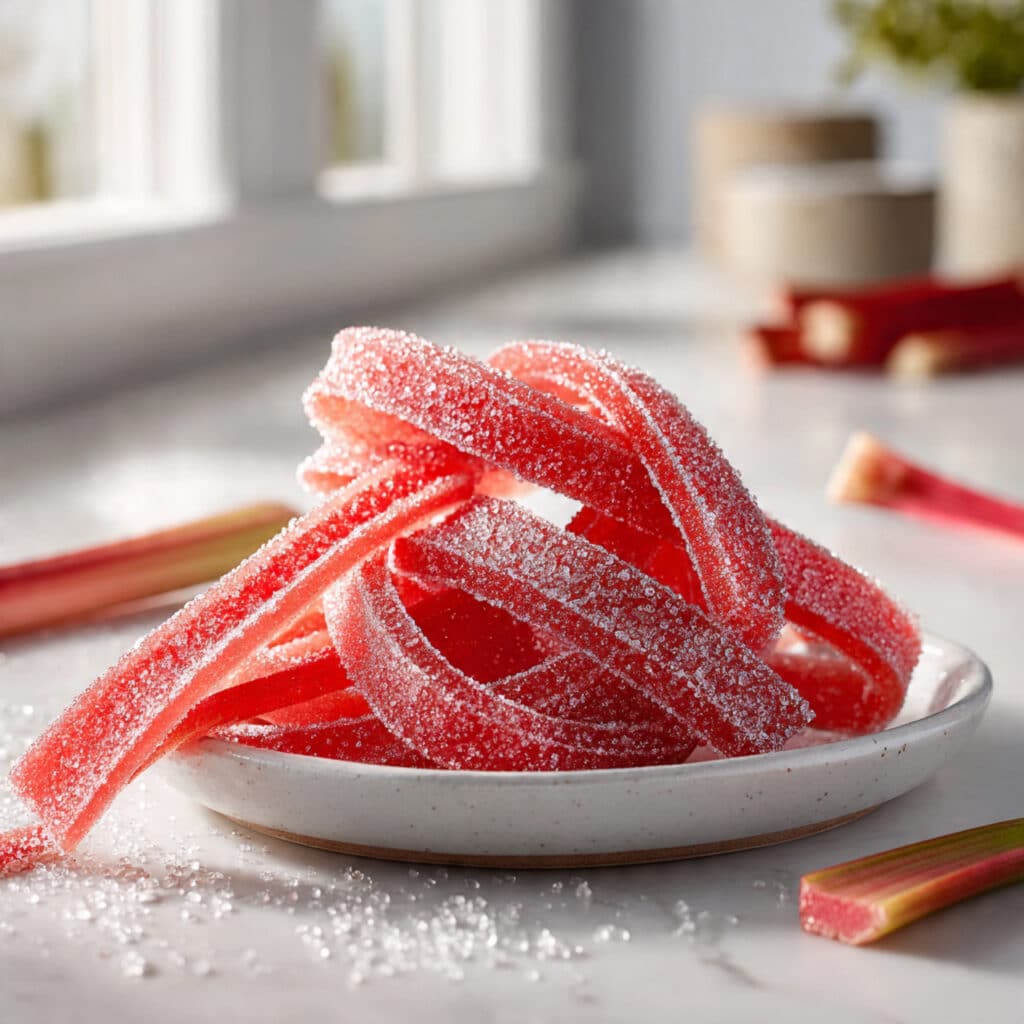
These sour belts are perfect for snacking on their own during road trips, hikes, or movie nights. The natural fruit sugars provide quick energy without the crash.
Include them in homemade trail mix with nuts, seeds, and dark chocolate chips. The tartness balances rich, fatty ingredients beautifully.
Serve alongside cheese and crackers for an unexpected sweet-tart contrast. They pair especially well with sharp cheddar or creamy brie.
Frequently Asked Questions
Can I make these without a dehydrator?
Yes, your oven works perfectly at the lowest setting. A dehydrator gives more even results but isn’t necessary for success.
How do I store rhubarb sour belts?
Store in an airtight container in a cool, dry place for up to one week. Humidity is the enemy, so avoid refrigeration which adds moisture.
Can I use frozen rhubarb?
Absolutely. Thaw completely and drain excess liquid before cooking. Frozen rhubarb may require slightly less water during the initial simmer.
Why are my sour belts sticky instead of chewy?
They need more drying time. Return them to the oven for another hour or two until they reach the right tacky-but-pliable texture.
Can I adjust the sourness level?
Yes, use more or less citric acid in the coating. Start with half a teaspoon and increase gradually to your preferred pucker level.
💬 Tried this recipe? Leave a comment and rating below!