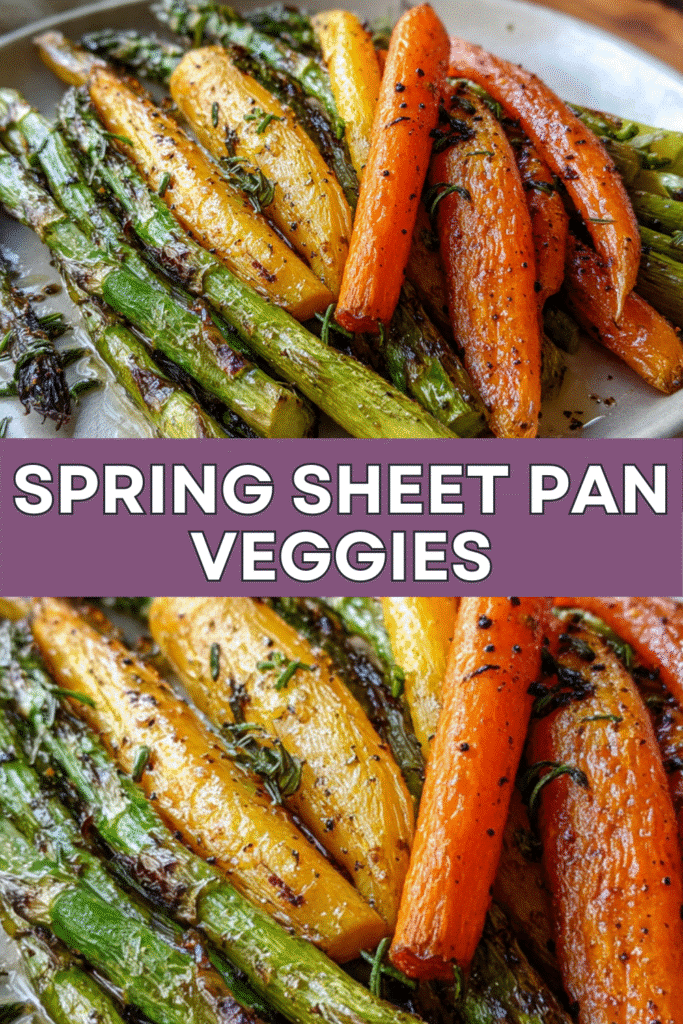
Roasted Asparagus and Carrots is the kind of effortless sheet pan side in minutes. Deep orange and vibrant green come together on a single pan, and high-heat roasting transforms both vegetables carrots caramelize into something almost candy-sweet, while asparagus turns nutty and crisp-tender with irresistible browned edges.
Why You’ll Love This Recipe
- One pan, zero mess — everything roasts together on a single sheet lined with parchment, so cleanup takes about 30 seconds.
- Stunning color contrast — the orange and green on one platter looks restaurant-quality without any extra effort.
- Naturally vegan and gluten-free — no swaps or modifications needed for most dietary guests.
- Set it and forget it — once the pan goes into the oven, your hands are completely free for the rest of dinner.
- Loaded with vitamins — carrots deliver Vitamin A and asparagus provides Vitamin K and folate, making this one of the most nutrient-dense side dishes in your rotation.
Equipment Needed
- Large rimmed baking sheet (dark metal preferred)
- Parchment paper
- Large mixing bowl
- Sharp knife and cutting board
- Vegetable peeler
- Paper towels
Roasted Asparagus and Carrots in 35 Minutes
- Total Time: 35 minutes
- Yield: 4 servings 1x
Description
Roasted Asparagus and Carrots brings two colorful vegetables together on one sheet pan with garlic, thyme, and olive oil — naturally vegan, gluten-free. The carrots caramelize at the edges while the asparagus tips turn lightly crisp, and a finishing drizzle of balsamic or lemon juice pulls every bite together.
Ingredients
- 1 lb fresh asparagus, woody ends trimmed
- 1 lb medium carrots, peeled and cut diagonally into ¼-inch slices
- 3 tbsp olive oil
- 3 cloves garlic, minced
- 1 tsp dried thyme (or 2 tsp fresh thyme leaves)
- ½ tsp garlic powder
- ½ tsp kosher salt
- ¼ tsp black pepper
- Optional garnish: 2 tbsp fresh parsley, chopped
- Optional finish: 1 tbsp balsamic glaze or fresh lemon juice
Instructions
1. Preheat the oven to 400°F. Line a large rimmed baking sheet with parchment paper or foil.
2. Peel the carrots and cut them diagonally into uniform ¼-inch slices. Trim the woody ends from the asparagus. Uniform cuts ensure both vegetables finish cooking at the same time.
3. Spread the carrots and asparagus together on the baking sheet. Drizzle with olive oil and add garlic, thyme, garlic powder, salt, and pepper. Toss directly on the pan until everything is evenly coated, then spread into a single layer without overlapping.
4. Roast for 15 minutes, then remove the pan and flip the vegetables with a spatula. Return to the oven for 10 more minutes until the carrots are fork-tender and the asparagus tips are lightly caramelized.
5. Transfer to a serving platter, scatter fresh parsley over the top, and finish with a drizzle of balsamic glaze or fresh lemon juice before serving.
Notes
Cut carrots into thin, uniform slices so they finish cooking at the same time as the asparagus.
Do not crowd the pan — spread vegetables in a single layer and use two pans if needed.
Flip at the halfway mark for even browning on both sides.
Add a drizzle of honey for a hint of sweetness that complements both vegetables.
Swap thyme for rosemary, Italian seasoning, or smoked paprika for a different flavor profile.
Store leftovers in an airtight container in the refrigerator for up to 4 days. Reheat at 375°F for 8 minutes to restore crispiness — microwaving makes them soft.
- Prep Time: 10 minutes
- Cook Time: 25 minutes
- Category: Side Dishes
- Method: Roasting
- Cuisine: American
Nutrition
- Serving Size: ¼ of recipe
- Calories: 145
- Sugar: 6g
- Sodium: 310mg
- Fat: 11g
- Saturated Fat: 1.5g
- Unsaturated Fat: 8.5g
- Trans Fat: 0g
- Carbohydrates: 14g
- Fiber: 5g
- Protein: 3g
- Cholesterol: 0mg
Ingredients You’ll Need
- 1 lb fresh asparagus, woody ends trimmed
- 1 lb carrots (baby carrots or large carrots peeled and cut into sticks)
- 3 tbsp extra-virgin olive oil
- 1 tsp garlic powder
- ½ tsp kosher salt, plus more to taste
- ¼ tsp freshly ground black pepper
- 1 tsp dried thyme (optional)
- Fresh lemon juice, for serving (optional)
Ingredient Notes
Carrots: Baby carrots are the most convenient option — no peeling, no cutting, and they roast well at the same temperature as asparagus when they are a comparable thickness to the spears. For regular large carrots, peel them and cut into sticks similar in width to your asparagus spears so everything finishes cooking at the same time. Uneven cuts produce some pieces that are mushy while others are still firm.
Asparagus: Medium-thickness spears work best here. Very thin asparagus overcooks before the carrots finish, so if your bunch is pencil-thin, add it to the pan 10 minutes after the carrots to stagger the timing. Snap or slice off the woody ends — the point where each spear naturally wants to bend is a reliable guide to where the tough part ends and the edible part begins.
Olive oil quantity: Three tablespoons might seem like a lot, but vegetables need fat to roast rather than steam. Too little oil and the vegetables dry out and scorch instead of caramelizing. If the vegetables look dry or chalky after tossing, add another half tablespoon before spreading them on the pan.
Step-by-Step Instructions
Step 1: Preheat the Oven
Preheat the oven to 400°F. Line a large rimmed baking sheet with parchment paper. High heat is essential for this recipe — lower temperatures cause the vegetables to steam and go limp instead of developing those caramelized, slightly crispy edges that make roasted vegetables so much better than boiled ones.
Step 2: Prep the Vegetables
Wash both the asparagus and carrots and pat them completely dry with paper towels. Trim the woody ends off the asparagus. If using large carrots, peel them and cut into sticks roughly the same width as the asparagus spears — consistency in size is the key to even cooking. If your carrots are significantly thicker than your asparagus, plan to give them a 10-minute head start in the oven.
Step 3: Season and Toss
Place both vegetables in a large bowl. Drizzle with the olive oil, then sprinkle evenly with garlic powder, salt, pepper, and thyme if using. Toss with your hands until every piece is thoroughly coated — take a moment to make sure no carrot sticks or asparagus spears are hidden under the others without any oil on them.
Step 4: Spread and Roast
Spread the seasoned vegetables across the baking sheet in a single layer with space between each piece. Crowding the pan causes the vegetables to steam in their own moisture rather than roast — if your pan looks full, use two sheets instead of stacking. Roast for 20–25 minutes, giving the pan a shake or tossing the vegetables with tongs around the 12-minute mark for even browning on all sides.
Step 5: Check and Serve
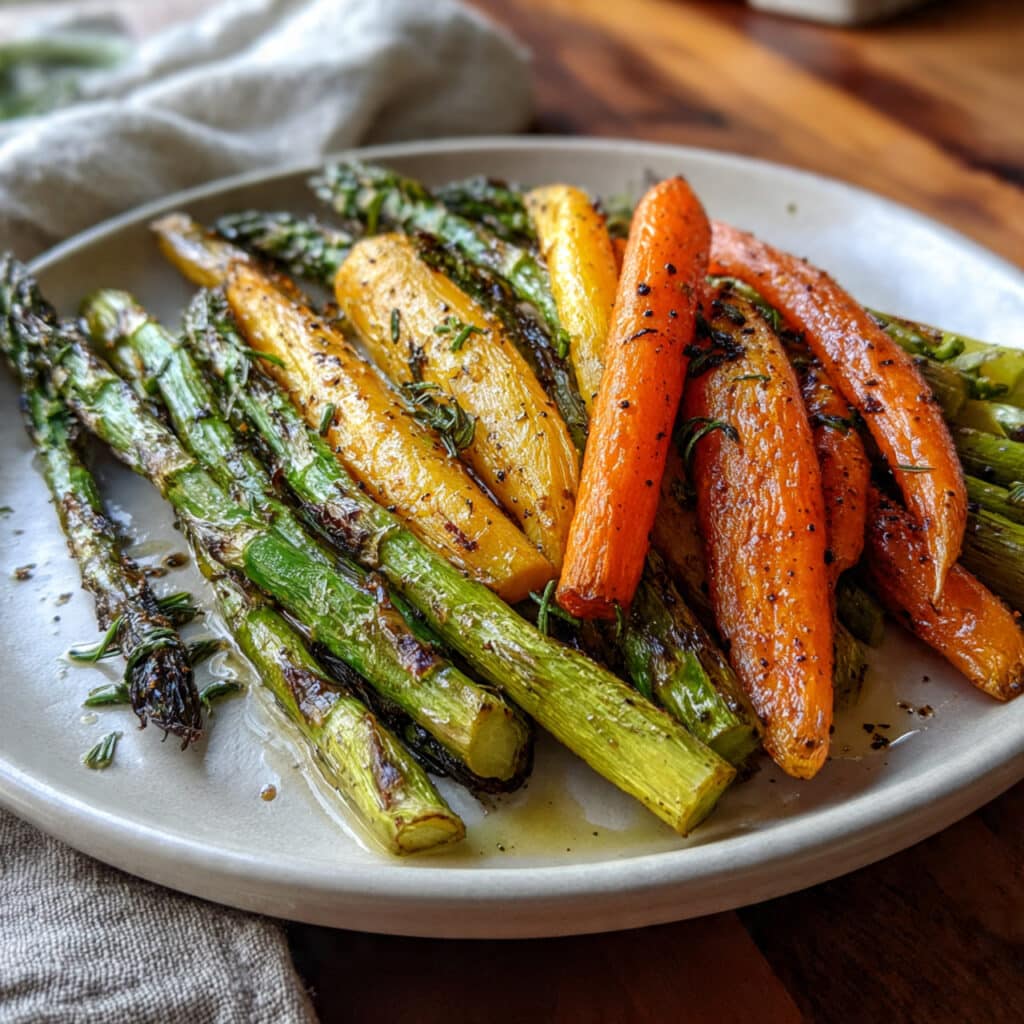
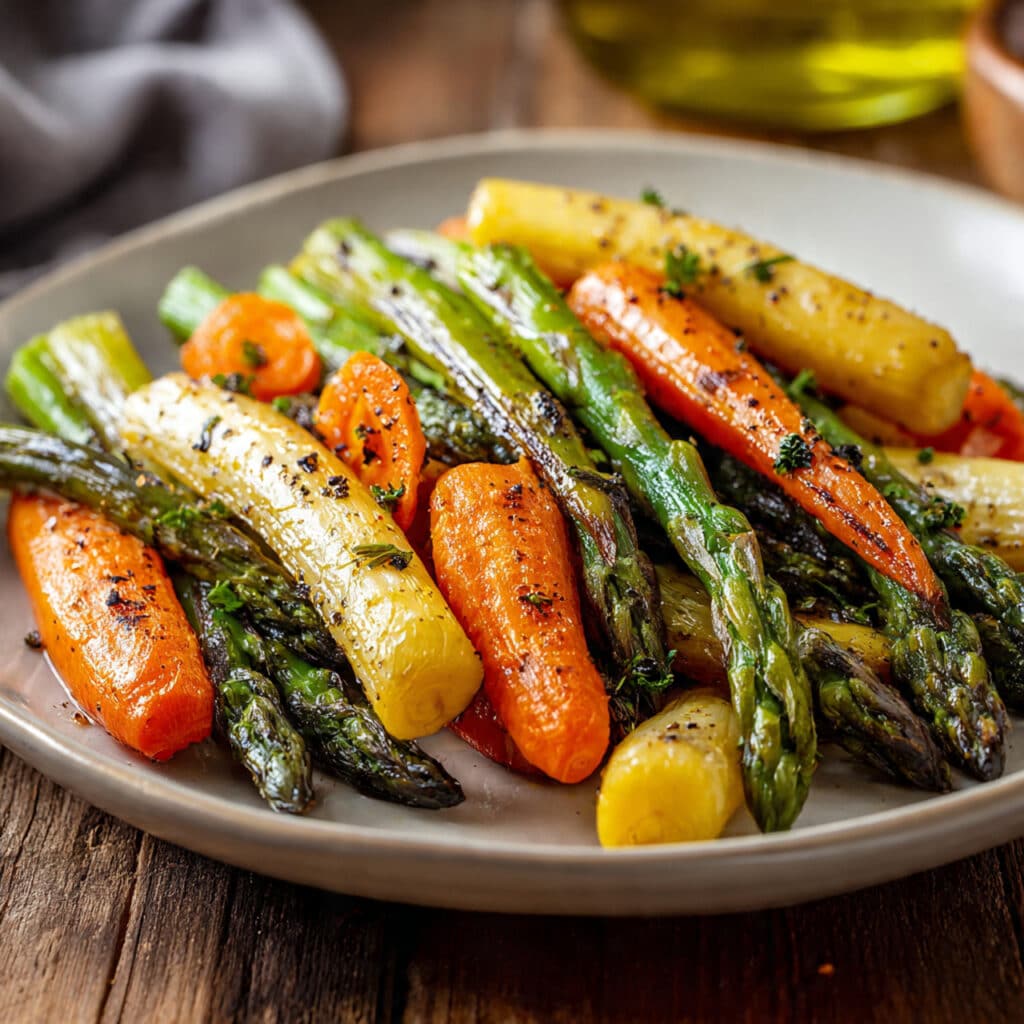
The vegetables are done when the carrots are tender when pierced with a fork and the asparagus tips look slightly crisped and caramelized. Taste and adjust salt if needed, then transfer to a serving platter. Squeeze fresh lemon juice over the top right before serving if desired
Pro Tips & Cooking Hacks
- Use a dark metal baking sheet — it absorbs heat faster than shiny aluminum and delivers better caramelized edges on both vegetables.
- Dry the vegetables thoroughly before tossing — moisture on the surface creates steam that works against browning.
- If your carrots are much thicker than the asparagus, roast the carrots alone for 10 minutes, then add the asparagus to finish cooking together.
- A drizzle of honey or maple syrup over the carrots before roasting deepens their natural sweetness and creates gorgeous caramelized edges.
- Leftovers reheat best in a 350°F oven or a hot skillet — the microwave makes them soft and watery.
Tips & Variations
Parmesan roasted version: Sprinkle 2–3 tablespoons of freshly grated Parmesan over the vegetables during the last 5 minutes of roasting. The cheese melts into a golden, slightly crispy coating that adds richness and savory depth to both the carrots and asparagus.
Balsamic glaze finish: Drizzle a tablespoon of thick balsamic glaze over the finished vegetables right before serving. The sweet, tangy richness complements the natural sugars in the carrots and the grassy notes of the asparagus. This variation works especially well as a side for roast pork or beef dishes.
Fresh herb upgrade: Toss the vegetables with a tablespoon of fresh thyme, rosemary, or chopped flat-leaf parsley before roasting for a more aromatic dish. Tender fresh herbs like parsley can also go on after roasting as a garnish, keeping their color and brightness intact.
Serving Suggestions
This colorful sheet pan side is a natural partner for Sunday roast chicken — the sweetness of the carrots complements the savory, herby skin, and the asparagus brings freshness that cuts through the richness. Set the whole pan on a trivet at the center of a family-style dinner table and let everyone serve themselves straight from the sheet for a casual, low-fuss presentation.
For a lighter meal, add these roasted vegetables to a grain bowl with cooked quinoa, a handful of chickpeas, and a drizzle of tahini or lemon vinaigrette. The combination of warm roasted vegetables and cool dressing is incredibly satisfying and works equally well as a packed lunch the next day — the flavors actually improve after a few hours in the refrigerator.
Common Mistakes
- Overcrowding the pan: This is the most common reason roasted vegetables turn out soggy. Give every piece room to breathe or use two pans.
- Low oven temperature: Anything below 375°F steams the vegetables instead of roasting them. Stick with 400°F for proper caramelization.
- Not drying the vegetables: Surface moisture creates steam and prevents browning. Pat everything dry before adding oil.
- Mismatched sizes: Large carrot chunks next to thin asparagus spears will never finish at the same time. Cut to a consistent width before roasting.
- Skipping the halfway toss: Without flipping at the midpoint, only the bottom side of each piece makes contact with the hot pan, leaving the top pale and under-caramelized.
What to Serve With Roasted Asparagus and Carrots
The bright, slightly sweet flavor of this side dish pairs beautifully with protein-forward mains. Roast chicken, baked salmon, and pan-seared pork chops are all natural partners. The caramelized carrots add sweetness that balances savory, herb-crusted meats, while the asparagus keeps the plate feeling fresh and light even alongside richer dishes.
At Thanksgiving, Christmas, or Easter, this side brings color and freshness to a table that can lean heavy on starches and casseroles. The minimal prep means it does not compete with more time-intensive dishes for oven space or attention. Roast it while the main rests and it is ready exactly when the table is set.
Frequently Asked Questions
Can I use frozen vegetables for this recipe?
Fresh vegetables produce significantly better results — frozen vegetables release water as they thaw in the oven, which creates steam and prevents caramelization. If fresh is unavailable, thaw frozen carrots and asparagus completely, pat them very dry, and use a higher oven temperature of 425°F.
How do I get the crispiest results?
Three factors produce crispy roasted vegetables: dry vegetables, enough oil, and no overcrowding. Hit all three and the caramelization takes care of itself at 400°F.
Can I add other vegetables to the pan?
Yes — broccoli florets, halved Brussels sprouts, bell pepper strips, and red onion wedges all roast well at the same temperature and timeline as the carrots. Cut everything to a similar size for even cooking.
How do I store and reheat leftovers?
Store in an airtight container in the refrigerator for up to 3–4 days. Reheat in a 350°F oven for 5 minutes or in a hot skillet over medium heat. Avoid freezing — roasted asparagus becomes mushy after thawing.
💬 Tried this recipe? Leave a comment and rating below!