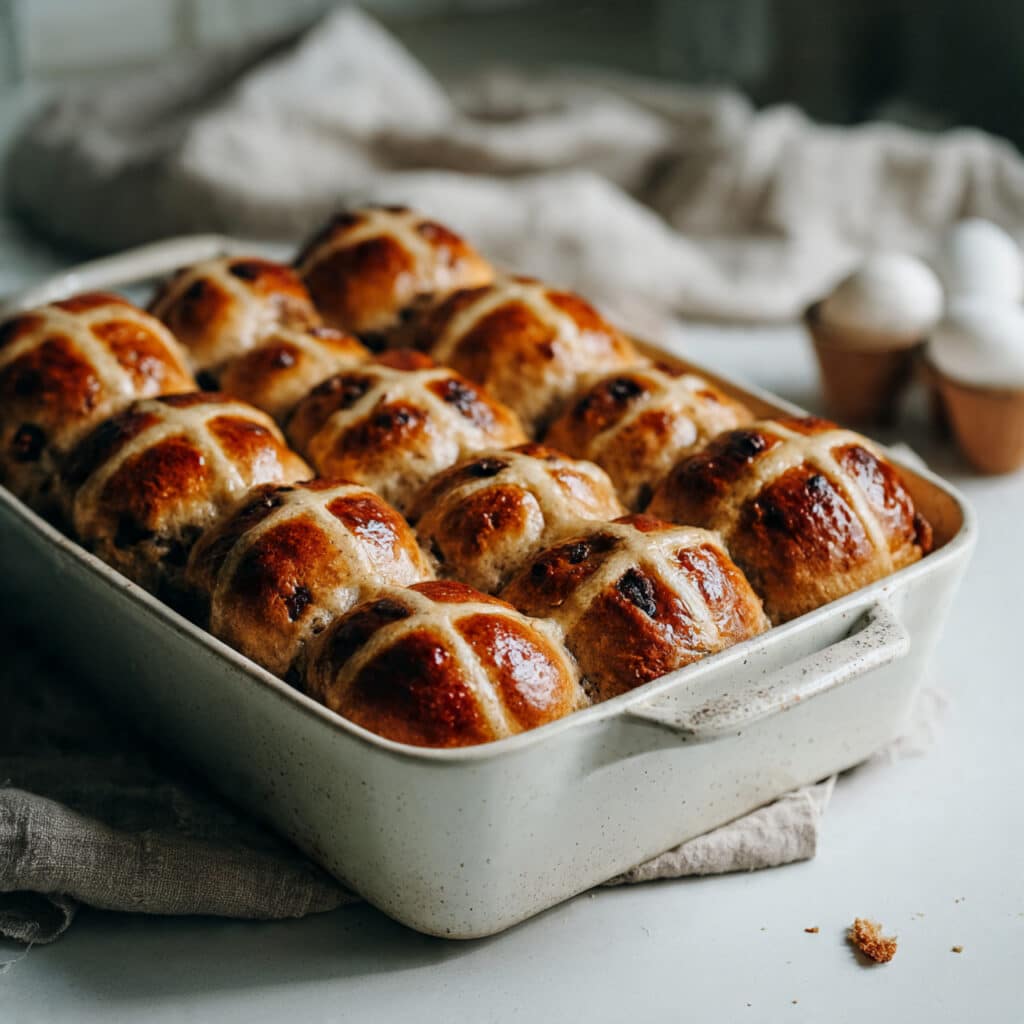
Sourdough Hot Cross Buns bring tangy sourdough flavor to the traditional Easter treat everyone loves. These fluffy, spiced rolls get their signature taste from active sourdough starter instead of commercial yeast, creating complex flavor that store-bought versions can’t match. Perfect for Good Friday breakfast or Easter brunch.

Why You’ll Love This Recipe
- Natural fermentation from sourdough starter makes them easier to digest
- Complex, tangy flavor that develops overnight for depth you can’t rush
- Softer, longer-lasting texture compared to traditional yeasted versions
- Uses your sourdough starter for a unique Easter tradition
- Makes 12 generous buns perfect for sharing with family
Equipment Needed
- 9″ x 13″ glass baking dish
- Large mixing bowl
- Small saucepan for heating milk
- Bench scraper or sharp knife
- Piping bag or ziplock bag
- Pastry brush
- Kitchen scale (recommended)
- Clean tea towel

Sourdough Hot Cross Buns
- Total Time: 45 minutes
- Diet: Vegetarian
Description
Sourdough Hot Cross Buns bring tangy sourdough flavor to the traditional Easter treat everyone loves. These fluffy, spiced rolls get their signature taste from active sourdough starter instead of commercial yeast, creating complex flavor that store-bought versions can’t match.
Ingredients
For active sourdough starter:
1 tablespoon (15g) sourdough starter
⅓ cup plus 1 tablespoon (50g) all-purpose flour
3½ tablespoons (50g) water
For the dough:
2 tablespoons (28g) butter
1 cup (240g) whole milk
¼ cup (50g) sugar
1 teaspoon (5g) salt
½ cup (100g) active sourdough starter
3 cups plus 2 tablespoons (375g) bread flour
2 teaspoons ground cinnamon
¼ teaspoon ground nutmeg
¼ teaspoon ground cardamom
1 cup (150g) dried fruit (raisins or candied citrus peel)
For the cross:
¼ cup (31g) all-purpose flour
1 tablespoon (15g) olive oil
2 tablespoons (30g) water
For egg wash and glaze:
1 egg
1 tablespoon water
¼ cup fruit preserves (orange or apricot)
Instructions
1. The night before (around 8 PM), combine 1 tablespoon starter, flour, and water in a clean jar. Stir well, cover loosely, and let sit at room temperature. By morning it should be doubled with plenty of bubbles.
2. At 7:30 AM, melt the butter, milk, sugar, and salt together in a small saucepan over low heat. Stir until the butter melts completely, then remove from heat. Let it cool to room temperature.
3. In a large bowl, whisk together the bread flour and ground spices. Add your active sourdough starter and the cooled butter mixture. Stir with a spatula until everything comes together with no dry flour pockets.
4. Cover the bowl and let rest for 1 hour. Perform a set of stretch and folds by grabbing one side of the dough, stretching it up, and folding it over itself. Do this 3 times total, spaced 30 minutes apart.
5. After the final stretch and fold, cover the bowl and let the dough rise for 2 hours until it’s increased by 50% in size. Look for a noticeable puffiness and some bubbles on the surface.
6. Turn the dough onto a floured surface and press into a rectangle. Scatter the dried fruit evenly over the surface, then roll into a log. Divide into 12 equal pieces (about 65 grams each). Shape each piece into a ball.
7. Arrange the balls in your greased glass baking dish, leaving small gaps between them. Cover with a damp tea towel and let rise for 3-4 hours until puffy and touching each other.
8. Preheat your oven to 375°F (190°C). Beat the egg with water and brush gently over the tops. Mix the flour, oil, and water for the cross paste until smooth. Pour into a piping bag and pipe crosses on each bun.
9. Bake for 25-30 minutes until golden brown on top. The internal temperature should reach 190°F when fully baked. Brush immediately with warmed fruit preserves while still hot. Let cool for 10 minutes before serving.
Notes
Feed your starter 12 hours before mixing the dough so it’s bubbly and at peak activity.
Bread flour creates the best texture with its higher protein content.
Glass baking dishes produce the softest buns – metal pans bake them faster but less tender.
Kitchen temperature matters – 68°F is ideal, warmer speeds up rise, cooler slows it down.
Store in an airtight container at room temperature for up to 4 days.
- Prep Time: 15 minutes
- Cook Time: 30 minutes
- Category: Breakfast
- Method: Baked
- Cuisine: British
Nutrition
- Serving Size: 1 bun
- Calories: 353
- Sugar: 9g
- Sodium: 229mg
- Fat: 5g
- Saturated Fat: 2g
- Unsaturated Fat: 2g
- Trans Fat: 1g
- Carbohydrates: 66g
- Fiber: 2g
- Protein: 10g
- Cholesterol: 21mg
Ingredients You’ll Need
For active sourdough starter:
- 1 tablespoon (15g) sourdough starter
- ⅓ cup plus 1 tablespoon (50g) all-purpose flour
- 3½ tablespoons (50g) water
For the dough:
- 2 tablespoons (28g) butter
- 1 cup (240g) whole milk
- ¼ cup (50g) sugar
- 1 teaspoon (5g) salt
- ½ cup (100g) active sourdough starter
- 3 cups plus 2 tablespoons (375g) bread flour
- 2 teaspoons ground cinnamon
- ¼ teaspoon ground nutmeg
- ¼ teaspoon ground cardamom
- 1 cup (150g) dried fruit (raisins or candied citrus peel)
For the cross:
- ¼ cup (31g) all-purpose flour
- 1 tablespoon (15g) olive oil
- 2 tablespoons (30g) water
For egg wash and glaze:
- 1 egg
- 1 tablespoon water
- ¼ cup fruit preserves (orange or apricot)
Ingredient Notes
Active sourdough starter is the key to success here. Feed your starter 12 hours before mixing the dough so it’s bubbly and at peak activity. It should have doubled in size with lots of bubbles throughout. If your starter isn’t active, your buns won’t rise properly.
Bread flour creates the best texture with its higher protein content, giving you that soft, pillowy interior. All-purpose flour works in a pinch but won’t be quite as fluffy. The extra protein helps support the weight of all that dried fruit.
Candied mixed peel is traditional for hot cross buns, offering bright citrus flavor. If you can’t find it, use raisins, dried cranberries, or a mix of dried fruits. Soak them in warm water for 10 minutes, then drain well before adding to prevent a dense, heavy dough.
Whole milk and butter create richness and tenderness that keep these buns soft for days. The fat slows down staling, which is especially important since sourdough recipes take longer to make. Don’t skip these ingredients or use low-fat alternatives.
Step-by-Step Instructions
Step 1: Feed Your Starter
The night before (around 8 PM), combine 1 tablespoon starter, flour, and water in a clean jar. Stir well, cover loosely, and let sit at room temperature. By morning it should be doubled with plenty of bubbles – that’s when it’s ready to use.
Step 2: Make the Butter Mixture
At 7:30 AM, melt the butter, milk, sugar, and salt together in a small saucepan over low heat. Stir until the butter melts completely, then remove from heat. Let it cool to room temperature – you should be able to comfortably touch it without burning yourself.
Step 3: Mix the Dough
In a large bowl, whisk together the bread flour and ground spices. Add your active sourdough starter and the cooled butter mixture. Stir with a spatula until everything comes together with no dry flour pockets. The dough will be sticky – that’s normal.
Step 4: First Rise with Stretch and Folds
Cover the bowl and let rest for 1 hour. Perform a set of stretch and folds by grabbing one side of the dough, stretching it up, and folding it over itself. Rotate the bowl and repeat until you’ve gone full circle. Do this 3 times total, spaced 30 minutes apart.
Step 5: Bulk Fermentation
After the final stretch and fold, cover the bowl and let the dough rise for 2 hours until it’s increased by 50% in size. It won’t double like commercial yeast dough – look for a noticeable puffiness and some bubbles on the surface.
Step 6: Add Fruit and Shape
Turn the dough onto a floured surface and press into a rectangle. Scatter the dried fruit evenly over the surface, then roll into a log. Divide into 12 equal pieces (about 65 grams each). Shape each piece into a ball by pinching the edges underneath and rolling gently.
Step 7: Second Rise
Arrange the balls in your greased glass baking dish, leaving small gaps between them. Cover with a damp tea towel and let rise for 3-4 hours until puffy and touching each other. In a warm kitchen, this might take less time; in a cool kitchen, more time.
Step 8: Prepare for Baking
Preheat your oven to 375°F (190°C). Beat the egg with water and brush gently over the tops. Mix the flour, oil, and water for the cross paste until smooth – it should be like thick pancake batter. Pour into a piping bag and pipe crosses on each bun.
Step 9: Bake and Glaze
Bake for 25-30 minutes until golden brown on top. The internal temperature should reach 190°F when fully baked. Brush immediately with warmed fruit preserves while still hot. Let cool for 10 minutes before serving warm with butter.
Pro Tips & Cooking Hacks
- Glass baking dishes produce the softest buns – metal pans bake them faster but less tender
- Make ahead by refrigerating shaped buns overnight, then bringing to room temp before baking
- Add asparagus trimmings to your starter feed for extra flavor depth
- Kitchen temperature matters – 68°F is ideal, warmer speeds up rise, cooler slows it down
- Freeze baked buns individually wrapped for up to 3 months
Tips & Variations
Make these dairy-free by using plant-based butter and milk. Coconut milk creates especially rich flavor. The texture will be nearly identical to the traditional version, so your dairy-free friends won’t feel left out at Easter brunch.
Try chocolate chip sourdough hot cross buns by adding ¾ cup dark chocolate chips along with the dried fruit. Reduce the dried fruit to ½ cup to make room. This modern twist is especially popular with kids.
Boost the citrus flavor by adding orange zest and using orange marmalade for the glaze instead of apricot preserves. The bright orange cuts through the richness beautifully. A little lemon zest works wonderfully too.
If your kitchen is cold, create a warm proofing environment by turning your oven to 200°F for 1 minute, then turning it off. Place the covered bowl or baking dish inside to proof – perfect temperature every time.
Serving Suggestions
Serve these warm, sliced horizontally with salted butter melting between the halves. The salt balances the sweetness perfectly. For Easter breakfast, set out butter, jam, and honey so everyone can customize their buns.
Toast day-old buns under the broiler for a few minutes to crisp up the outside while warming the inside. The caramelized edges contrast beautifully with the soft center. Spread with cream cheese for an extra-special treat.
Make French toast with leftover buns by dipping in egg mixture and pan-frying until golden. The spices and fruit make them naturally perfect for French toast. Top with maple syrup and fresh berries for an indulgent Easter brunch.
Common Mistakes
- Using starter that isn’t fully active results in dense, heavy buns
- Not adjusting rise time for kitchen temperature leads to over or under-proofed dough
- Adding hot milk mixture to flour kills the sourdough cultures
- Skipping stretch and folds creates uneven texture and poor structure
- Baking in metal pans at this temperature makes buns dry out faster

What to Serve With Sourdough Hot Cross Buns
These buns shine as the centerpiece of Easter breakfast. Add scrambled eggs, crispy bacon, and fresh fruit for a complete spread. The savory elements balance the sweet buns perfectly without overwhelming the meal.
For a traditional British Easter, serve with strong black tea or coffee. The slightly bitter drinks cut through the richness and sweetness beautifully. Set out clotted cream and lemon curd for an extra-special touch.
Make it a brunch buffet by adding quiche, roasted vegetables, and a big fruit salad. The variety lets people build their perfect plate. Your sourdough buns will definitely be the star attraction though.
Frequently Asked Questions
Can I use all-purpose flour instead of bread flour?
Yes, but the texture won’t be quite as fluffy and soft. Bread flour’s higher protein content creates better structure to support all that fruit. If using all-purpose, the buns will still taste great but be slightly denser.
How do I know when my starter is ready?
Your starter should double in size within 8-12 hours of feeding, have lots of bubbles throughout, and smell pleasantly sour like yogurt. If it’s not bubbling or hasn’t grown, it’s not ready – wait longer or feed it again.
Why are my buns dense instead of fluffy?
Usually this means your starter wasn’t active enough, or you didn’t give enough rise time. Sourdough takes longer than commercial yeast, especially with all those spices and fruit weighing it down. Be patient with the rising times.
Can I make these without dried fruit?
You can, but they won’t be traditional hot cross buns. The fruit is a defining characteristic. If you really dislike it, try chocolate chips instead – at least you’ll have something distributed throughout the dough.
How long do these stay fresh?
Store in an airtight container at room temperature for up to 4 days. The sourdough fermentation and fat from butter and milk keep them fresher longer than regular bread. Warm for 10 seconds in the microwave before serving.
💬 Tried this recipe? Leave a comment and rating below!